What Is God’s Plan for Parenting?

What Is God’s Plan for Parenting?

A craving for certainty

True confession: At times, my desire for certainty borders on craving. In all areas of my life, but particularly as a mom. My craving for certainty has been a prevailing struggle through now-30-years of motherhood. I want to be sure of what to do, when to do it, and how to do it. I also want results!

God seems to have different plans. In no other arena of my life have I felt less certainty and more pressure about seemingly life-altering decisions.

Some matters are small (though they may seem huge at the time)—like whether to schedule feed my baby to get her to sleep through the night; how to pep up school lunches to get a finicky child to eat.

Others are clearly momentous—like, how to get our adolescents to “just say no” to drugs; which treatment options to use for a chronically ill child.

Part of God’s plan for parenting is to grow us up.

Dan Allender says, in one of my favorite parenting books, How Children Raise Parents:

“…no other arena in life holds us more hostage to hope, more afraid to dream, more defensive about our decisions, and more open to receive help…[Parenting] is the space in our lives where we are most open to the work of God to change us….”

His words make me ask…

What if, for a moment, we quit reading parenting books, stopped listening to the other working moms by the water cooler at work…

What if we got really still and knew that God is God?

What if we became curious about what God is up to in our uncertainty? Could he be calling us to do the two hardest things to do as a parent?

The two hardest things to do as a parent…

  1. Let go of control.
  2. Depend on the saving power of Christ.

What might that look like?

Letting go of control as parents…

First, let’s talk about what letting go of control does not mean:

  • letting our toddlers boss us around.
  • saying, “Whatever” when our kids decide they want to stop doing homework or showing up at school.
  • allowing our children to get their way.

Here are some things it might mean to let go of control:

  • Stopping in the middle of our craziness. Just. Slow. Down.
  • Remembering the power, plans, and promises of God.
  • Keeping a catalogue of stories from Scripture where God showed up and did the impossible in unexpected ways (the Abraham, Sarah, and Isaac story in Genesis 12-21 is one of my favorites).
  • Remembering how God has worked in your life or child’s life in the past.
  • Confessing the truth to God: “I want to be in charge here. I’m not really sure I trust you to do the best thing for my child (!). (This is where I realize how foolish I am to think I love my child more than God).
  • Asking for help.

Which brings us to the second order of repentance:

…depending on Christ as parents.

Again, let’s talk about what this doesn’t mean.

  • It doesn’t mean that we choose not to seek a doctor’s help with a screaming, feverish baby.
  • It doesn’t mean we leave it to the youth minister to communicate the gospel to our teenager.
Letting go of control doesn't mean we leave our children's gospel growth up to the youth minister. #parenting Share on X

Here’s what it does look like:

  • Knowing that God first loved us—and our children—while we were sinners (Romans 5:6-8).
  • Knowing that we are made right through Christ (2 Cor. 5:21), not through our own perfect parenting decisions.
  • Knowing that our children are made right through Christ, not through their grades at school, their college admissions, or even their obedience to their parents (though that is a fruit of being ‘in Christ.’)
  • Remembering that in Christ, we have the Holy Spirit as our helper (John 14:18), to bring wisdom and to heal, and to do brand new things.
  • Waiting to see how God will work in our lives and our children’s lives to bring us to himself.

Stripped of all of our devices, weary of trying this tip or that program to get our kids to do better in school, “just say no” to drugs, make good friendships, we lay ourselves before him and utter the most essential word for good parenting, “Lord, help!” I believe this may be closer to God’s plan for parenting. What do you think?

A Prayer for God’s Plan for Parenting

Lord,

Forgive us for not trusting your plans for our parenting. Thank you that you are teaching us to depend on Jesus and to trust you more and more each day. Help us to keep turning over control to you. By your mercy in Jesus, we ask. Amen.

Photo by Vivek Kumar on Unsplash.
A Good Read for Hard Times: The Waiting Room Devotional

Reading Story: Four Books to Check Out Today

Reading Story: Four Books to Check Out Today


As promised, some brief reviews of books I’ve been reading lately. Discover “habits of grace,” see if you want to be “Educated,” find out more about “Visual Theology,” and consider the gospel hope for suffering in Tolstoy. This week, four book reviews to help you grow in knowledge and wisdom and/or joy.

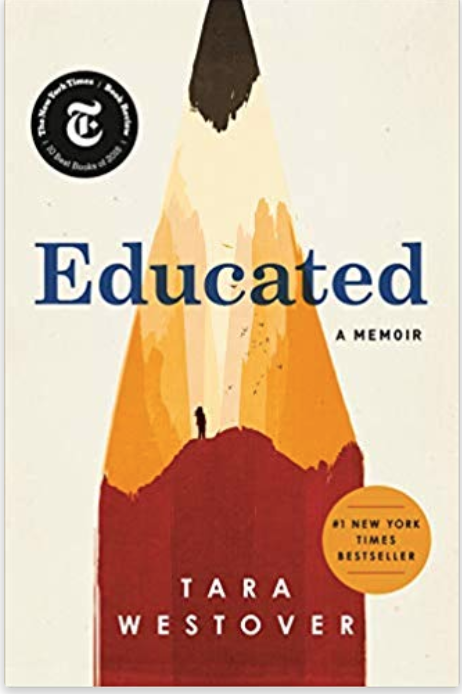
Educated

A Memoir

Tara Westover

First, a caution. People who have suffered trauma and abuse may find this book very disturbing. Graphic descriptions of wounds and injuries may be hard for the squeamish (that’s me!). I listened to it like a highway driver who cannot turn her head away from an accident site. Eventually I turned to a paper copy so I could skim over the really graphic details of the injuries that kept mounting up. Despite my struggle with the graphic descriptions of violence, I still recommend this book.

It’s a fascinating, even addictive read. The driving question for me was, “How in the world did a girl who grew up in such a story become the woman who wrote this book?” It is a powerful story of redemption, not necessarily Christian redemption (the author introduces the book with a disclaimer of sorts, noting that while there is a message about fundamentalism, the memoir is not intended to be a message about any particular religion).  At the very least, there is common grace and profound healing at work, with hope for the future. Read it if you can; read it to understand how trauma affects people; read it to discover hope for healing.

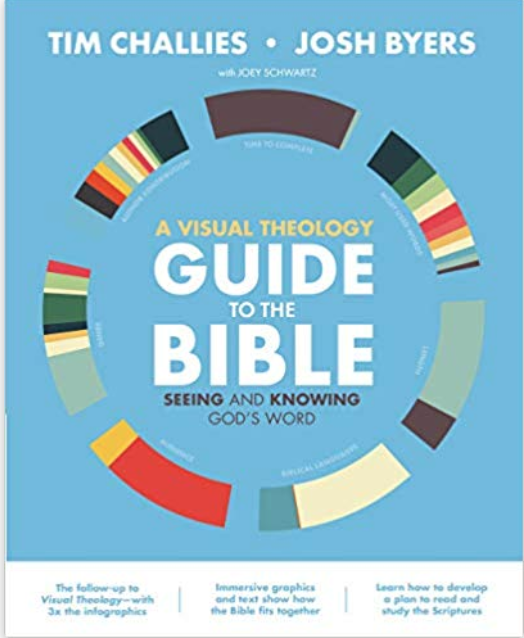
A Visual Theology Guide to the Bible

Seeing and Knowing God’s Word

Tim Challies and Josh Byers

Where was this book when I was in high school, slogging through those Old Testament judges and kings? (Well, I actually loved my Old and New Testament Bible classes in high school, and they were God’s way of introducing me to the Bible which I’d never really read). I discovered A Visual Theology while planning the recent Bible study series for the blog. What an awesome gift to the world! It has eye-catching graphic charts for just about anything you might want to study in the Bible. In addition to the graphics, it is an excellent resource on the Bible. Some of my favorite parts include:

  • A well-crafted overview of the Bible and its reliability, made lively and interesting with the brightly colored graphics.
  • Some great hints about why and how to study the Bible.
  • Chapters explaining how to see Jesus in all of the Bible.

Some of my favorite graphics:

  • A gorgeous (really!) chart of all those kings I had to memorize in high school (and have long since forgotten). Right there in one nifty chart on page 143, along with the prophets that cried out to them and the passages where you can find them.
  • A depiction of the longings of Israel and how they were fulfilled in Jesus (p. 146).
  • A lovely design detailing the fulfilled prophecies about Jesus. (164-165).

This is the book you will pull out to refresh your memory or to learn something new about the Bible. I’d say it belongs on the reference shelf for any Bible teacher and most Bible students.

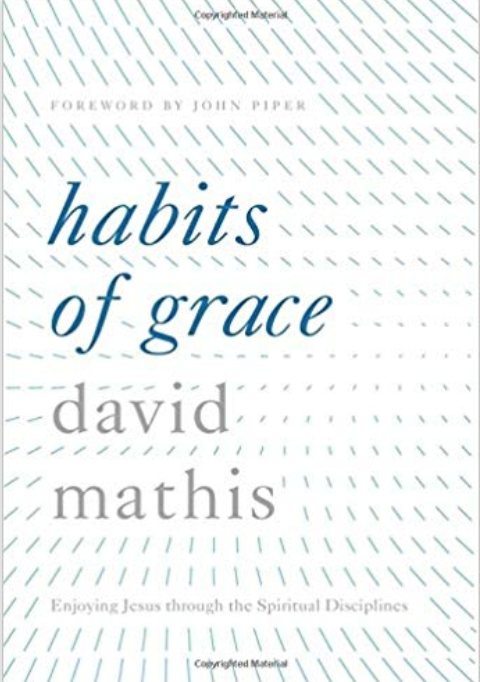
Habits of Grace

Enjoying Jesus Through the Spiritual Disciplines

David Mathis

This nifty little resource, which I also used for my spiritual graces series, came to me through our church library (Can I get a huge “thank God” for all the wonderful church librarians out there?! David Mathis is generous and hospitable, welcoming us into habits of “grace,” ways to grow closer to the Lord. He boils these habits down to the basics then offers supplements to add as time and season allow or require. Mathis names three main habits of grace:

  • “Hear his voice” (Word).
  • “Have his ear” (Prayer).
  • “Belong to his body” (Fellowship).

For each, he makes practical and accessible suggestions for how to go about developing healthy habits. I particularly loved the chapter on journaling “as a pathway to joy” and the chapter on fasting as a way of “sharpening your affections” in a culture focused on filling. He follows the three main categories with brief chapters about making disciples, stewarding our finances, and using our time wisely. Read this one if you want to be encouraged and/or refreshed in developing spiritual habits of grace.

Death of Ivan Ilyich

Leo Tolstoy

A follow up to reading Karen Swallow Prior’s On Reading Well, The quickest way to say you’ve read Tolstoy, but that’s not the only advantage of reading this gorgeous novella. Tolstoy, as always, does a masterful job of tracing the progression of a character, in this case, Ivan Ilych, whose ordinary pursuit of self-fulfillment is extraordinary in its description. As he agonizes through his illness, we strain with him, eager to learn how his suffering will end. The self-sacrificial love of his servant Gerisim is startling, surprising, and lovely. Read the book to discover what happens to the miserable Ivan.

A Good Read for Hard Times: The Waiting Room Devotional

Be of Good Cheer: Hope for Recovery

Be of Good Cheer: Hope for Recovery

These things I have spoken to you, that in Me you may have peace. In the world you will have tribulation; but be of good cheer, I have overcome the world.” John 16:33 NKJV

Hurricanes and Other Disasters

With the descent of Dorian, hurricane season has launched, tossing its mighty winds and roaring waters through our mind’s eye, arousing fears of future devastation and memories of past disasters.

It’s been about fifteen years since Hurricane Ivan wreaked its havoc on our hometown, Pensacola, Florida, leaving a morass of blue roofs in its wake.

  • Fifteen years since…
  • The fall our children and I lived with my mom in Atlanta for three long weeks.
  • The weeks my husband sweated through a restless sleep at our home and rode his bicycle to the hospital for work.
  • The year I entitled our Christmas letter: “living in a landscape of loss.”

Recovery

It’s been so long ago now that the primary impact has faded, and we’re left mainly with the memories, the funny (now) stories of how our fifteen year old son, who had only had his learner’s permit for a month, drove my mom and our other children to Atlanta to evacuate because I was away for a grad school class. The story of my husband riding his bike home after the storm, stopping to climb over piles of trees blocking the road, finally arriving at our home, only to realize he had left his house keys in his car at the hospital. We can laugh now. I guess you could say we’ve recovered from Hurricane Ivan.

We’ve recovered. But some never did. Some lost homes, businesses, even families to the disaster. They may have found a new home or started a new business, but the heartache of the catastrophe lingers. Maybe you haven’t been hit by a hurricane; maybe it was a divorce, a sudden revelation of a spouse’s affair. Maybe you were slapped with a devastating cancer diagnosis. Or maybe your 23-year-old just disclosed that she “identifies” as transgender.

The hard reality is that many of the disasters we face in our lives deal us losses we may never fully recover from. What are we to do? How can we live in a world in which some losses will never be recouped?”

Hope

Jesus, in his final discussion with his disciples, anticipated this question. Shortly before his brutal crucifixion for a made-up crime, he prepared his followers for the disasters that mark life in a fallen world:

“In the world you shall have tribulation, but be of good cheer, for I have overcome the world.”

Many of us in western culture struggle to understand Jesus’ words, because our culture wants us to believe a lie: that the world is good, and that the things in it are here to make us happy. The message of the Bible contradicts this lie: humans were created “very good,” in the image of God, but when the first humans, Adam and Eve, tried to take things into their own hands, tried to steal glory from God, life on this earth unraveled. Now, every human comes into this world seeking to satisfy self (Psalm 51:5). Now, in this fallen world, creation groans, and we groan along with it. (Romans 8:23).

Thankfully, the story didn’t end there, with a weeping creation that would never fully recover. It didn’t end there with selfish human beings who would never learn how to love others and love God again. Thanks be to God.

And that is what Jesus is trying to explain to his disciples. It’s okay, he assures them. Yes, in this world, on this earth, you will suffer. I’m teaching you how to live in my world, my kingdom. Not only that, when I die and am raised again, you will have the resurrection power to live a different life, a new life, to recover some of what was lost in the fall. You will still struggle; you will still suffer, here on this earth. That’s okay. That’s to be expected. But if you remember these things I have told you, you will have peace. Not only that, you can be “of good cheer,” “take courage,” “not be afraid,” “take heart,”

Because “I have overcome the world.”

One day, not yet, but “soon,” I will come back. And I will take you to live with me in a new world, the world you were really made for. In that day, all of the pain, the pain of being betrayed by the one you gave your heart to, the pain of seeing your home ravaged by a storm or flood or fire, the pain of losing the business your grandmother built…all that sorrow will be washed away. All the sin—the clawing to get your own way, the clashing against loved ones over small differences, the clinging to things you think will satisfy you—it will be over. Overcome. Defeated. By me, your King. Love, Jesus.

There is something better that awaits. It is not recovery. It is restoration. It is renewal. It is reunion. It is reconciliation. Cheer loudly and long. Jesus has overcome the world.

Photo by John Middelkoop on Unsplash

Sunday Morning Coming Down, or Why Church Matters

Sunday Morning Coming Down, or Why Church Matters

How I learned that church matters…

Does church matter? It’s not uncommon these days to hear people say, “I believe in God, and I read my Bible and pray, but I don’t need to go to church.” Are they right? If we are regularly reading the Bible, if we are regularly praying, do we really need to go to church?

The short answer, I believe with all my heart and mind, is “yes.” In church, in fellowship with other believers, we hear the Word preached, and it changes us (Romans 10:17). With the body of Christ, we take part in the body of Christ, and we grow up to look like him (1 Cor. 10:16). Other believers encourage us, cheering us on, weeping with us, rejoicing with us, praying with us, serving with us, sharing the good news with us (Hebrews 10:24-25).

I could go on like this, making an argument for the necessity of church. But today I want to share a story, of how church first communicated God’s grace to me, and why, despite struggling with several broken church stories over the years, I consider it a non-negotiable spiritual grace.

Before there was church: “Silent Sundays”

I woke up Sunday morning with no way to hold my head that didn’t hurt…the beer I had for breakfast wasn’t bad, so I had one more for dessert…

Maybe not the best lyrics for a seven-year-old-girl to have stuck in her head, but Kris Kristofferson’s song, as performed by Johnny Cash, is the song line of redemption that to this day, reminds me of why I love church.

I’m pretty sure the song played every Sunday morning we visited my Dad’s little rented ramshackle farmhouse, where he moved after my parents divorced. The album cover, with Johnny’s head looming large, sat propped on the three-foot-high wooden box speaker.

In that season of our lives, Sundays echoed with the “disappearing dreams of yesterday.” Sundays were the day of exchange, when my brother and I were returned from our weekend visit. Sundays were weighty, too quiet, sad.

Weighty and sad, there was indeed something in a Sunday to make you feel alone. #church #story Share on X

Because of blue laws, Sundays were sleepy. Nothing except church opened on Sundays until 1. We didn’t go to church, at least not in the early years of divorce. At my mom’s, the sound of solitude echoed through our little apartment as the morning hours crept by. At 12:45, the three of us would pile into her little beige Toyota Corolla and venture out to Treasure Island, the 60’s predecessor to Target, with its wavy roof and vast concrete jungles that were beginning to pave paradise.

Don’t get me wrong. Not all Sundays were so sadly silent. There were picnics at the park and plays at the community theater, fall mornings throwing the football and spring days playing tennis. There was goodness and sweet and light. But it seemed that darkness hovered, threatening to overcome it.

Johnny Cash crooned out the longing I couldn’t quite place:

Somewhere far away a lonely bell was ringing, and a Daddy with a laughing little girl he was swinging….

Church and “laughing little girls”

It was at church that I first caught glimpses of the laughing little girl inside me. At my grandmother’s house, where my brother and I stayed for a month in the summertime, Sunday meant church. More than once, I was sent back upstairs to put on my slip (a thin undergarment that we wore under sheer materials like dotted swiss!!). We went first to Sawnnnn-da School, as my grandmother assured everyone I used to call it. We sat at small tables under the kind expression of blue-eyed Jesus (Yikes! I didn’t say church was perfect!) and colored lost sheep. After church, as a special treat, we went to the church library and checked out clean-smelling hardback books.

When my brother turned sixteen and had the freedom to drive, he decided we should start going to church. In fact, he decided that we ought to be confirmed. (I never thought to argue). We had been baptized in a small chapel as infants, and over the years, we had occasionally visited the colossal cathedral when our mom or dad, whoever had us, was attending. Now, as teenagers, off we went, Sunday mornings for church and Sunday school and back on Sunday afternoons for confirmation classes. Sundays now offered purpose and structure and something to study, which this little teacher-girl always loved.

Now there was something in a Sunday that made the body not feel so alone. #church #story Share on X

Even after I was a confirmed member of the Church, it took me another year to understand the meaning of church, the essence of Christianity (Again, I didn’t say church was perfect!). When I was 15, at a weekend Christian retreat, I sat on a rock under a starry sky and spoke to God the only three words I fully understood at the moment: “I need you.”

Now there was something in a Sunday that made the body not feel so alone. There were daddies with laughing little girls and the luscious smell of someone frying chicken (well, that was on Wednesday nights at a later church). But that was still not what Kristofferson, what Cash were really missing.

The “something lost somewhere along the way” was The Story, the gospel, preached, lived, and taught. Church is a place where those who smoked their minds the night before—and those who didn’t—come to consume the message we crave, the message of forgiveness in Jesus Christ, the message of grace, the message of our one true hope.

Kristofferson’s words ring true:

And there’s nothing short a’ dying
That’s half as lonesome as the sound
Of the sleeping city sidewalk
And Sunday morning coming down.

Yes, there is sorrow and loneliness and pain to be found in the church. But here, in the hospital for sinners that offers hospitality to strangers, the light overcomes the darkness. It is a place where the song line of redemption meets the sound of sleeping city sidewalks. It is the place where we sing and tell the only story that truly satisfies the loneliness and longings of Sunday morning coming down.

Photo by sergio souza on Unsplash

Sunday Morning Coming Down

by Kris Kristofferson

Well, I woke up Sunday morning
With no way to hold my head that didn’t hurt.
And the beer I had for breakfast wasn’t bad,
So I had one more for dessert.
Then I fumbled in my closet through my clothes
And found my cleanest dirty shirt.
Then I washed my face and combed my hair
And stumbled down the stairs to meet the day.

I’d smoked my mind the night before
With cigarettes and songs I’d been picking.
But I lit my first and watched a small kid
Playing with a can that he was kicking.
Then I walked across the street
And caught the Sunday smell of someone frying chicken.
And Lord, it took me back to something that I’d lost
Somewhere, somehow along the way.

On a Sunday morning sidewalk,
I’m wishing, Lord, that I was stoned.
‘Cause there’s something in a Sunday
That makes a body feel alone.
And there’s nothing short a’ dying
That’s half as lonesome as the sound
Of the sleeping city sidewalk
And Sunday morning coming down.

In the park I saw a daddy
With a laughing little girl that he was swinging.
And I stopped beside a Sunday school
And listened to the songs they were singing.
Then I headed down the street,
And somewhere far away a lonely bell was ringing,
And it echoed through the canyon
Like the disappearing dreams of yesterday.

On a Sunday morning sidewalk,
I’m wishing, Lord, that I was stoned.
‘Cause there’s something in a Sunday
That makes a body feel alone.
And there’s nothing short a’ dying
That’s half as lonesome as the sound
Of the sleeping city sidewalk
And Sunday morning coming down.

Exercise: Write your own church story:

  • Why not write or tell this story: What’s your story with church? Consider these questions to get started:
    Did you go as a child and stop going along the way?
  • Have you experienced redemption at church?
  • Do you have a broken church story?
Sharing is caring. If you enjoyed this post and think others would like to learn their stories, be sure to share by clicking one of the buttons.
If you enjoyed this post and want to get one like it every week, be sure to subscribe to Living Story

On Reading Well: Four Great Books to Check Out Today

On Reading Well: Four Great Books to Check Out Today


“In a world dominated by tweets and texts, hot takes and sound bites, the call to read and to read well couldn’t be more timely, especially for the people of God.” Matt Chandler, endorsing Karen Swallow Prior’s book On Reading Well.

Do you love reading? I am what one might call a “bibliophile,” (a lover of books): I read in the morning (my Bible), read during the day for whatever I am writing about, read while working out or driving (through listening to novels on Audible), and read at night to fall asleep. And yet, I confess, this lump of metal and wires in my hands presents a real obstacle to my reading sometimes. Tweets, posts, photos, blogs…I am too easily seduced by the scroll, and there went thirty minutes I could have been reading an actual entire book.

While I’m confessing, I also realized that though I love books and telling people about books, I haven’t devoted much time to sharing these great stories on this blog, partly because it’s challenging to sum up all the things I love about certain books in a format intended for fairly quick reading. All that to say—I’m going to make an effort starting today and in the future to share some mini-book reviews with you.

Here are four wonderful ones I read or listened to this summer. Maybe you’ll skip reading the rest of this blog and start reading one of these today!

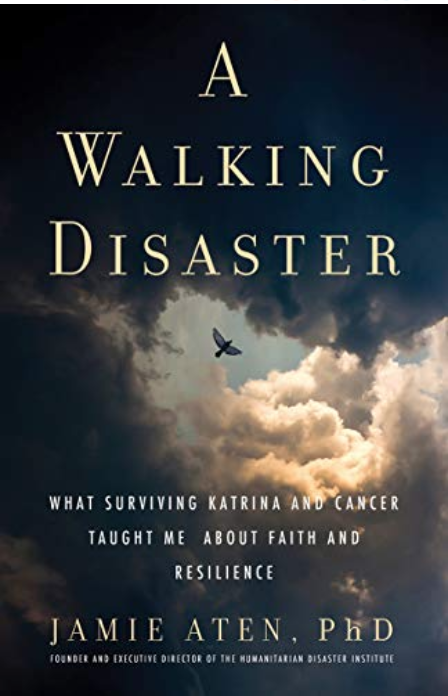
A Walking Disaster

What Surviving Cancer and Katrina Taught Me about Faith and Resilience

Dr. Jamie Aten

Read this one before (or after) the hurricane hits, or before (or after) the dread diagnosis arrives.

Dr. Jamie Aten, Founder and Executive Director of the Humanitarian Disaster Institute, a survivor of colo-rectal cancer and Hurricane Katrina, takes us into the world of disaster recovery and offers significant hope. As Dr. Aten shares his personal experience, he addresses many of the questions posed by suffering people and explains how suffering can strengthen our faith and resilience. Some of my favorite chapters were on “Dealing with Pain,” “Distinguishing between Optimism and Hope,” and “Facing Our Mortality.”

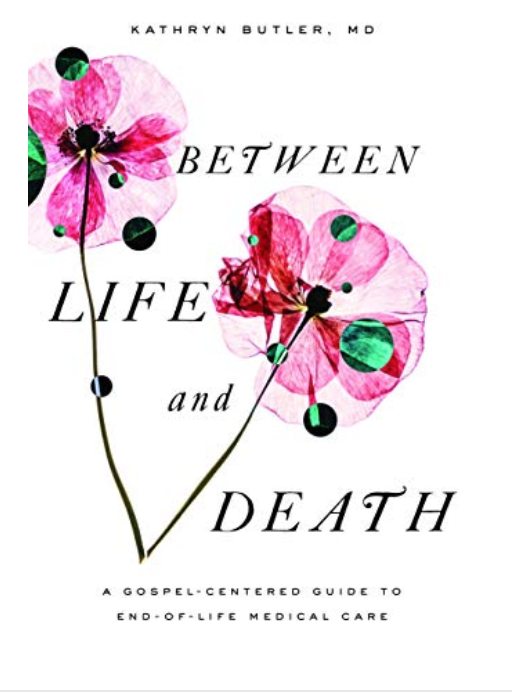
Between Life and Death

A Gospel-Centered Guide to End-of-Life Medical Care

Dr. Kathryn Butler

Read this when you are faced with bewildering end-of-life decisions for loved ones or yourself.

Ideally, read it before that day comes, but if you can’t, have it nearby when it arrives.

Dr. Kathryn Butler, former critical care surgeon turned writer and homeschooling mom, offers a gospel-centered approach to end-of-life care. As a skilled surgeon who understands the complexities of end-of-life care and as a gifted teacher, she is the perfect person to help laypeople understand the often-confusing end-of-life decisions set before us.

I appreciated the introduction and beginning, in which she helps the reader understand the issues, both from a medical perspective and a Christian perspective. She kindly organized the book in a way that helps people find what they need when they need it. Topical chapters include: Resuscitation for Cardiac Arrest (hint: it’s nothing like what we see on The Good Doctor), Intensive Care, and Brain Injury. The next section, called Discernment at Life’s End, with a glossary and suggestions for further reading, includes a sample Advance Directive that is worth the price of the book.

If you are in your forties and above, you’ll want a hard copy of this one to pull out as a reference, to guide yourself or your friends when those difficult days come.

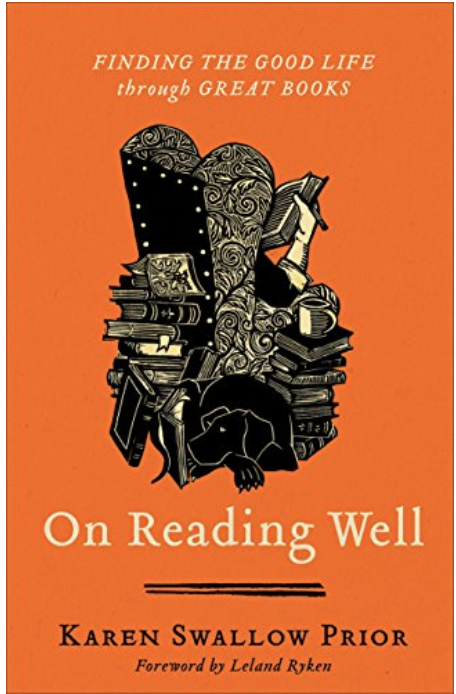
On Reading Well

Finding the Good Life through Great Books

Dr. Karen Swallow Prior

Not for English majors only. People who love books will love this book about reading books, but even people who don’t necessarily love books have something to gain from On Reading Well. Dr. Karen Swallow Prior is an English professor who centers her life in Christ. Dr. Prior makes her case that reading can help us discover “the difference between evil and good,” an argument she attributes to John Milton in Areopagitica. “Reading well is,” she argues, “in itself, an act of virtue, or excellence, and it is also a habit that cultivates more virtue in return” (Prior, 15).

Bibliophile that I am, I loved the introduction on reading well: reading to learn how to think, reading things you enjoy, reading with a pen or pencil ready to mark the book…well, let’s just say I made many marks on these pages! After making a convincing argument that reading well is a worthwhile, even enjoyable endeavor, Dr. Prior takes us on a journey through twelve different virtues, exploring each through a particular classic. Her chapter on kindness and George Saunder’s “Tenth of December” made me pray to be more kind and less envious; her chapter on patience and Jane Austen’s Persuasion encouraged me to read this one of Jane Austen’s books I’ve never read; her chapter on the Death of Ivan Ilyich and her discussion of her father’s suffering made me want to read that short novel of Tolstoi’s (which I’ve succeeded in getting my son to read though I haven’t gotten to it yet).

Read this book to discover why reading well is crucial; read it to discover more great books to read!

Queen Sugar

A Novel

Natalie Bascile

Read it if you want to stand in a steaming cane field in Southern Louisiana (or maybe if you just want to imagine what that would be like). Read it if you want to explore the themes of racism, sexism, and the Great Migration.

Natalie Baszile’s novel, set primarily in southern Louisiana, transported me to a place and a story I knew little about. Her carefully crafted and richly complex characters drew me in to their story, creating empathy. I wanted to meet these people. As they traversed various landscapes, I came to understand better the Great Migration of African-Americans in the early twentieth century and was introduced to the current trend toward reverse migration.

Read it for the plot, read it for the characters, read it for the eloquent writing! Even better, listen to the version narrated by Miriam Hyman, available on Audible and possibly in your library’s audio collection.  

Get a new free gospel-centered resource every month!

A Good Read for Hard Times: The Waiting Room Devotional

The Paradoxical Freedom of Belonging to God

The Paradoxical Freedom of Belonging to God

As you may have noticed, we live in a world that prioritizes autonomy, the freedom of self-rule. The mantra of the 21st century is best summed up by my children’s cry to one another when they were young, “You’re not the boss of me!”

How then, can it be, that belonging to God brings the freedom we really yearn for? The first question and answer of the Heidelberg Catechism tells us that comfort comes from belonging to a God who sent his Son to be our faithful Savior, to pay for all of our sins, and to set us free from the power of sin and evil.

In July of 2017, I was grieving many illnesses and losses of loved ones at the same time I was studying the Heidelberg Catechism. Little did I know that even as God gave me the good news about my only comfort in life and in death, I would need to believe it more than ever in a few short weeks.

Here is the exercise I did. Why not try it? Who knows when you might desperately need this comfort?

1. Read the entire question and answer aloud, slowly, taking your time.
2. Listen to the words and let them wash the comfort over you like a refreshing shower on a hot summer’s day.
3. For further comfort: Look up the Bible verses from which they are taken, which are listed below.
I pray you may find the true comfort and hope in Jesus Christ our faithful Savior.
This version is copied from Heidelberg Catechism.com

What is your only comfort
in life and death?

• 1.1 Cor 6:19, 20.
• 2.Rom 14:7-9.
• 3.1 Cor 3:23; Tit 2:14.
• 4.1 Pet 1:18, 19; 1 Jn 1:7; 2:2.
• 5.Jn 8:34-36; Heb 2:14, 15; 1 Jn 3:8.
• 6.Jn 6:39, 40; 10:27-30; 2 Thess 3:3; 1 Pet 1:5.
• 7.Mt 10:29-31; Lk 21:16-18.
• 8.Rom 8:28.
• 9.Rom 8:15, 16; 2 Cor 1:21, 22; 5:5; Eph 1:13, 14.
• 10.Rom 8:14.

That I am not my own, 1
but belong with body and soul,
both in life and in death, 2
to my faithful Saviour Jesus Christ. 3
He has fully paid for all my sins
with his precious blood, 4
and has set me free
from all the power of the devil. 5
He also preserves me in such a way 6
that without the will of my heavenly Father
not a hair can fall from my head; 7
indeed, all things must work together
for my salvation. 8
Therefore, by his Holy Spirit
he also assures me
of eternal life 9
and makes me heartily willing and ready
from now on to live for him. 10

Photo by Dawid Zawiła on Unsplash