5 Verses about Whole-Hearted Living

5 Verses on Whole-Hearted Living


It’s Valentine’s Week, and that always makes me think about hearts and what they have to do with Valentine’s Day, and where did Valentine’s Day really come from anyway?

(If you really want to know the answer, Wikipedia of course has a great article explaining that Valentine was a religious Saint, most likely martyred for his Christian beliefs by the emperor Claudius, and that hearts probably entered the picture with good old Geoffrey Chaucer).

Mostly though, in the spirit of focusing on true love during February, I was interested in what the Bible says about the word “heart.” It is primarily attributed to humankind, and usually refers to mind, emotions, or will.

Though “whole-hearted” living is kind of in fashion right now, it actually originates with the story of shalom God wrote into our very beings. With the Fall, hearts have been broken, but God’s restoring work through Christ transforms our hearts and frees us to live our stories for his glory.

With love and gratitude to my Living Story readers, I offer you…

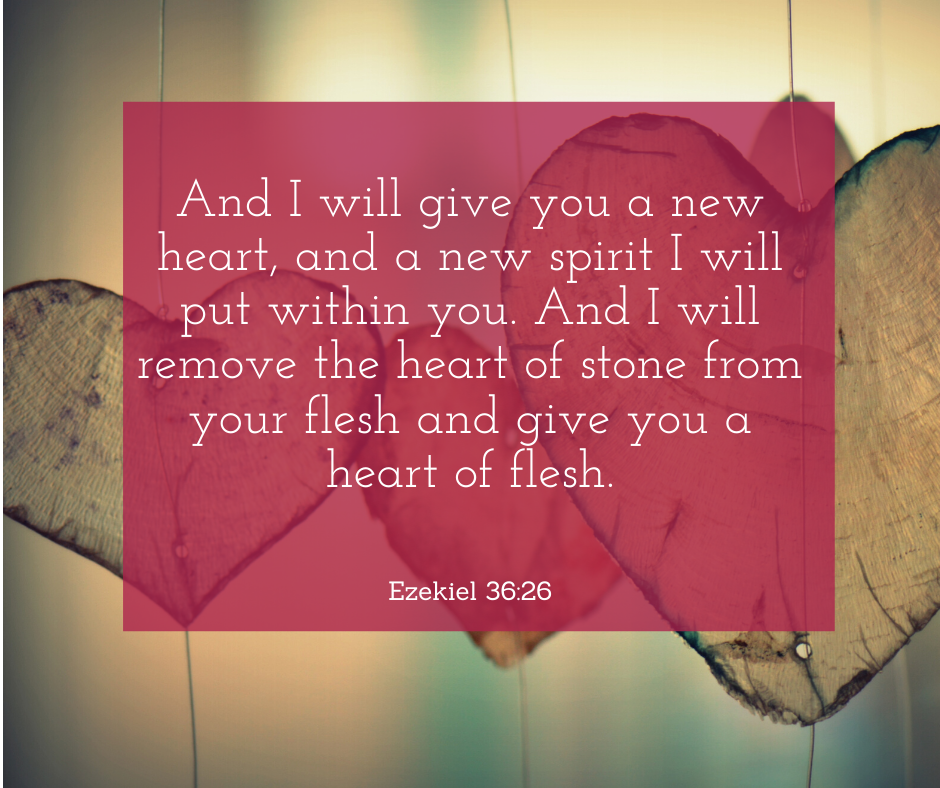
Ezekiel 36:26

And I will give you a new heart, and a new spirit I will put within you. I will remove your heart of stone and give you a heart of flesh.

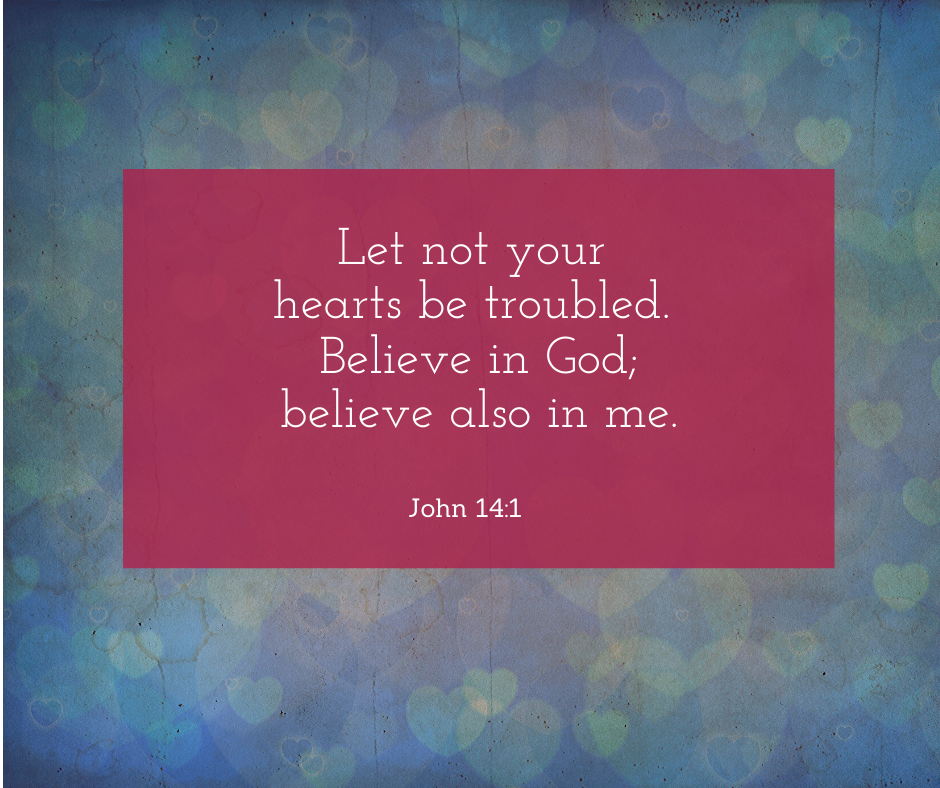
John 14:1

Let not your hearts be troubled. Believe in God; believe also in me.

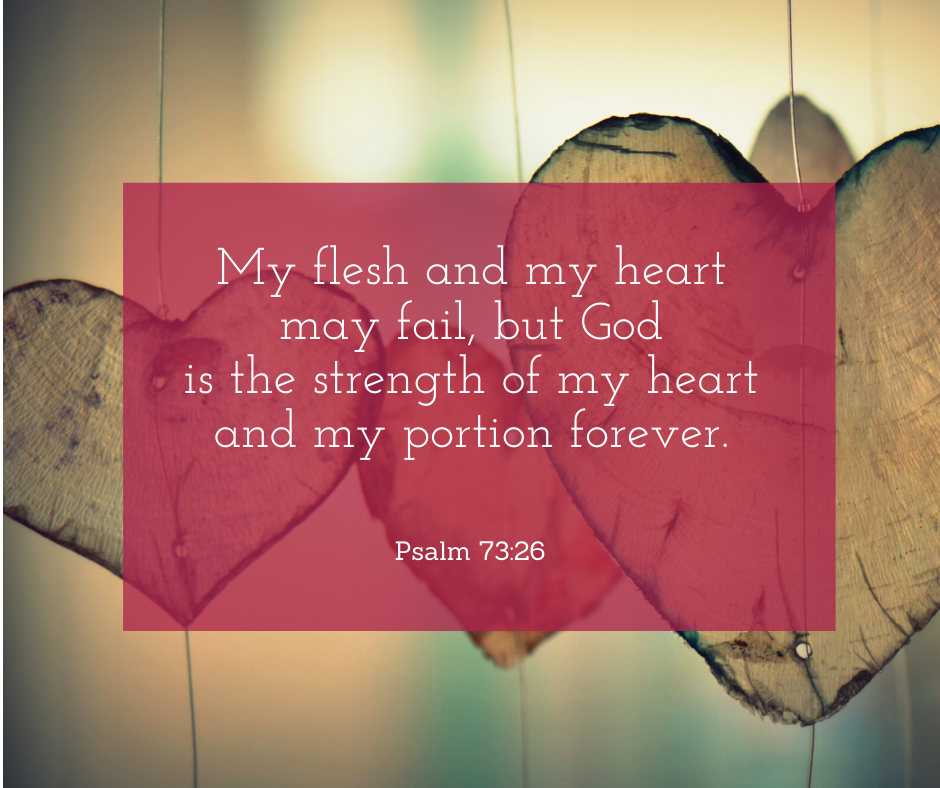
Psalm 73:26

My flesh and my heart may fail,
but God is the strength of my heart and my portion forever.

Romans 10:10

For with the heart one believes and is justified, and with the mouth one confesses and is saved.

2 Corinthians 3:2

You yourselves are our letter of recommendation, written on our hearts, to be known and read by all.

Get a new free gospel-centered resource every month!

A Good Read for Hard Times: The Waiting Room Devotional

Parenting Goals: Should We Have Them?

Parenting Goals: Should We Have Them?

Parenting Goals: What do you think?

Do you think parents should have goals and plans? If so, what kind?

When I venture to write about parenting, I always do so tremulously. Yes, I am the mother of four adult children, ages 30 to 24, mother-in-law to three. And yes, they are pretty awesome kids. But my husband and I (and my children, I’m sure) agree—their awesomeness is not the product of our parenting expertise, of which we have some, but not enough. They have grown and matured and become the wondrous creatures they are only by the grace of God.

That being said, even as God has grown our children, he has redeemed and matured us as parents over the past thirty years. Since this month’s blog theme is Planning and Goals, I decided to revisit our parenting goals or lack thereof.

The Early Years: My Top 5 Unstated Parenting Goals

The truth is, I’ve never been much on writing down my parenting goals. I think we may have done it once when our eldest was a colicky six-month-old, when the gracious grandparents offered to keep him so we could go to a Family Life conference. I think there was a workbook, and I think there was a place for parenting goals? (As you can see, the postpartum amnestic effect took its toll!).

By the time our second child came along twenty-one months later, I had neither time nor energy to write formal parenting goals. That is not to say that I didn’t, at some level, have them. So here it is…

My Previously Unstated Parenting Goals

  1. To survive.
  2. To have the ideal family.
  3. To win the “mother-of-the-year” award.
  4. To raise kids just like us.
  5. To “just get them out.” (All four of my children were 8-14 days overdue;-)!

As my children grew, and as God grew me, I believe some truer goals/desires/prayers emerged, although again, I don’t recall writing them down.

The Later Years: My Top Five List of Mostly Unstated Parenting Goals

  1. Remember that God loves me even when I’m a “failure” as a mom.

Before I became a mom, I taught English to junior high and high school students. I loved teaching, and I was mostly good at it (according to my superiors, students, and [most of] their parents). When I brought that first baby home, my competence and confidence evaporated. (Maybe I pushed them out along with the baby in my 33-hour Pitocin-induction labor?)

Some of my parenting ‘fails’ make me laugh now. I didn’t know what happened when you changed a boys’ diaper. One time a second-grade teacher sent me a note requesting that I pack a peanut butter and jelly sandwich in my child’s lunch instead of peanut butter and crackers (This was in the days when peanut butter was not verboten.) And so on.

Although my parenting ‘fails’ make me laugh, my parenting sins make me weep. I lost my temper, I yelled, I guilted them, and I whined. And that’s just the beginning. Frequently. It hurt. Them and me. I wanted to be a perfect mom—always kind and patient and nurturing. Hope came as I learned I could not make God love me less. Rest came as I trusted in Christ’s righteousness, not my performance as the core of my identity.

Do you know what your unstated goals of parenting are? Here were some of mine. #parenting Share on X
  1. Ask forgiveness. Repent quickly.

This second goal is a corollary to the first.

I’m not sure how any parent survives the guilt and shame of failing our children if we do not believe that Christ freed us from our sins and God has forgiven us in Christ.

So I learned to say I was sorry. To God and to my children. I didn’t/don’t always go quickly, but I usually went/go. I learned to ask forgiveness for – fill-in-the-blank: speaking too quickly, humiliating them, not listening to them…the list goes on. I learned to ask God to change my heart.

To this day, my husband and I believe that asking forgiveness and repenting are the most important habits we developed as parents.

  1. Pray for me as a mom, pray for them as kids.

I didn’t know this till I became a parent, but I quickly realized that many questions in parenting don’t have clear answers. Not only are we often confused as parents, we are also frequently powerless.

I quickly realized that many questions in parenting didn't have clear answers Share on X

Do we let them cry at night or pick them up and feed them? What do I do when my child is bullied on the playground? How do I punish my teen for breaking curfew to help a friend? And on and on. Sometimes there are practical answers, and it often helps to seek wise counsel, but the first and last and in-between thing to do is pray.

  1. Help them live their stories for God’s glory.

It took us way too long to realize this. For many years we tried to get our kids to live the story we had written for them (see above). Over time, though, we learned and are learning to honor the individuals God has created them to be. We ask God to show us how to support and encourage them in living out that story for God’s glory—not for ours!!!

  1. Teach them, “Be kind to one another” (Ephesians 4:32).

This was one of the few parenting goals that I think I might have written down. I know I knew it by heart. It was my go-to, my default. It was the motto I wanted my kids to live by, so much so that I have been known during sibling bickering to raise my voice many octaves and command: “Be kind to one another!”

Parenting Goals, Yes or No?

In writing this blog, I discovered that I have had and do have a mission in mind—“Be kind to one another, forgiving one another, just as in Christ, God forgave you.” That mission in many ways guided my goals, which I think I did write down—as prayers: “Lord, help me to help [insert child’s name] in her struggle with organic chemistry” (I totally made that one up). There was and is an intentionality to my mothering, and I did take specific actions to reach my often-unstated parenting goals.

A Prayer about Parenting Goals

Dear God, you are such a good Father. Thank you for forgiving us our parenting sins and for helping us get over our parenting fails. You indeed have parenting goals for us, to grow us to be mature and complete, to live for your glory, and to bless others with the riches of Christ. Help us as parents to set good goals for our family: to learn, live, and love in your story of grace. In Christ’s kind name we ask, Amen.

What about you? Do you write goals for parenting? Do you have a family mission statement? What steps would you like to take to be more intentional about your parenting?


Photo by Priscilla Du Preez on Unsplash

5 Story Questions for the New Year

5 Story Questions for the New Year

Does the new year seem like old news to you by now?

We have long since toasted the new year with champagne or fizzy grape juice, watched a ball or bird drop somewhere, and cheered (or yelled) ourselves hoarse over now-nearly-forgotten football games. We’ve eaten our collards, pork, and black-eyed peas, made our resolutions, and already broken many, if not all of them.

I resist making resolutions, because for me, they usually mean “things I will accomplish through my determined will and human effort,” and that’s a complete setup for disaster. Instead, I think about stories.

Why we should mark our stories in the new year:

This time of year is a great one for marking our stories, remembering where we have been, thinking about where we are now, and considering where we are going. As we view what God has done in our lives through the year(s), some general themes start to emerge. We remember our purpose and calling, one of which is as The Message puts it, “Go after love as if your life depended on it, because it does.” (I Cor. 14:1).

Consider these five questions as this chapter of a new year begins:

  1. What events have happened in my life and in my heart in the last year? What tragedy and/or redemption do I see?
  2. Where am I now? Think emotionally, spiritually, circumstantially.
  3. What might God have for me in the coming year or years? What new freedoms in Christ might I experience?
  4. Who are the people who will support and encourage me as I step into these hopes and dreams?
  5. How must I depend on the Holy Spirit to act in grace? How may God be glorified?

I’d love to hear how you answer some of these questions. Please share them in the comments or join me on my Facebook page, Elizabeth Reynolds Turnage, Author, for discussion.

A Prayer about Living in God’s Story of Grace

Lord, you know our hearts inside and out. You designed us for your glory even before we were born. In your son, Jesus, you have re-created us to do good works (Eph. 2:10). By your Spirit, we ask you to reveal your plan for us and empower us to “go after love as if our life depended on it” (1 Cor. 14:1, MSG). Amen.

On Dining with Strangers at Thanksgiving

On Dining with Strangers at Thanksgiving

We’re all strangers.

With all of the current heartfelt discussion about welcoming “strangers” into our country, I thought I’d return to some basic facts from history — and the Bible — about this feast we call Thanksgiving! 

When my kiddos were little, the pre-schools and elementary schools always had Thanksgiving feasts. For these sweet occasions, I was often given the opportunity to create a Pilgrim costume out of paper bags (and thanks be to God for the schools who did that for us poor parents :-)!!) or an “Indian” costume (as the first Americans were called then) out of a t-shirt, some brown dye, and some scissors (and again, for all of you schoolteachers who did that for us…my eternal thanks:-)!

As pretty as that tableau was, it only resembled part of the real first Thanksgiving, according to Joanna Brooks, writing about the first pilgrims for Smithsonian Magazine. For many of the immigrants to America, life was characterized by starvation, poverty, fighting, and murder. But somehow in the midst of the mess, some of these strangers came together and made a feast. Ever-so-briefly, there was ever-so-tentative peace on earth.

Will you dine with strangers?

As Christians, God has called us to a feast of thanks-giving. Together, we recall that God redeemed and transformed broken, sinful people. Christ fed us physically, with bread and wine, and spiritually, with his body sacrificed to redeem and renew us.

In a few days, you may be sitting at table with a fractured community (or you may be NOT sitting at table because of fractured community). My Thanksgiving prayer for all of us is that we can remember that we were once far off — from God — and from one another, and that our Savior brought us near:

But now in Christ Jesus you who once were far off have been brought near by the blood of Christ. Eph. 2:13

This Savior, who broke down the dividing wall of hostility, brought us together to feast and thank God as one. For this reason, this Thanksgiving, may we accept invitations to dine with strangers — even those in our own family! As we do, may we dream of a day when the feasting will be centered around the greatest stories ever told of the goodness of the Lord. Here is some Scripture that you may enjoy reading aloud alone or together as an encouragement to celebrate with hope:

Isaiah 25: 6-10, The Message
But here on this mountain, God-of-the-Angel-Armies
will throw a feast for all the people of the world,
A feast of the finest foods, a feast with vintage wines,
a feast of seven courses, a feast lavish with gourmet desserts.
And here on this mountain, God will banish
the pall of doom hanging over all peoples,
The shadow of doom darkening all nations.
Yes, he’ll banish death forever.
And God will wipe the tears from every face.
He’ll remove every sign of disgrace
From his people, wherever they are.
Yes! God says so!
Also at that time, people will say,
“Look at what’s happened! This is our God!
We waited for him and he showed up and saved us!
This God, the one we waited for!
Let’s celebrate, sing the joys of his salvation.
God’s hand rests on this mountain!”


Photo by Annie Spratt on Unsplash

Get free printable prayer worksheet and cards

The Real Reason We Don’t Have to Worry

The Real Reason We Don’t Have to Worry

Endless opportunities for worry…

  • The state of our nation.
  • Cyber attacks.
  • Teenagers texting and driving.
  • Loved ones addicted to destructive substances.
  • Layoffs at work.
  • An unwelcome diagnosis.

Some days, some years, it seems that fresh opportunities for high anxiety arrive with every phone call, text, or news report.

Why shouldn’t we worry?

Philippians 4 offers a hopeful response to anxiety, but it seems sometimes it is tossed out as a purported quick-fix remedy for all our worry. When we hear an abbreviated version, divorced from its context, which I believe I actually cross-stitched and framed for my mom once,

“do not worry about anything; instead, in prayer and petition, with thanksgiving, let your requests be known to God…”

it can potentially put more pressure on us….We can end up worrying about our worry.

Learn how not to worry about your worry! #anxiety Share on X

We need “the whole story”…

We need to read more of Philippians 4 to know why we shouldn’t worry. We really need the entire book of Philippians, if not the entire narrative of Scripture :-), but just one more verse will help.

Recently, I discovered a little clause I had not paid much attention to before. (Side note: don’t you love it when the Spirit reveals new insights as  you study Scripture?!) I don’t remember ever seeing this little clause included on a memory verse card.

Here is the part most-often-quoted:

“do not worry about anything, but in everything by prayer and supplication with thanksgiving let your requests be made known to God.

Phil. 4:6-7

Please excuse me if I turn into an old-school English teacher for a moment:-)! Ready for a little quiz?
No grades, no red pens, just fun pre-smartphone grammar involved. What’s wrong with the first word of the first sentence —do?

If you gleefully shouted, “Oh, I know — it’s not capitalized!!” you probably were born before 1996 and might actually capitalize letters in text messages:-)! And that is the correct answer if verse 6 is an entire sentence.

The real reason we shouldn’t worry…

There is actually another clause in the sentence. It comes at the end of verse 5, and in the ESV is separated by a semi-colon (;) (yes, that little mark I always forgot to use instead of a comma to avoid run-on sentences! The whole sentence says,

“The Lord is near; do not worry…”

In the original languages, the Bible did not have punctuation; translators inserted it along with the chapters and verses. Some translations do have these two clauses as separate sentences, but I think the NRSV and the ESV get it right.

Enough grammar lesson — here’s my point —

QUESTION: How in this crazy world can we not worry about anything?!

ANSWER: Because, the Lord is near!

What does it mean that the Lord is near, when I can’t see him or touch him? The gospel story tells us:

  • He has come to earth in the form of a man, Jesus Christ – Immanuel. The Lord is near; do not worry.
  • Christ’s life, death, and resurrection has brought his kingdom near. Death is being defeated, and all of creation is being renewed day by day. The Lord is near; do not worry.
  • The Holy Spirit, Comforter, Guide, and Agent of Hope, is in us. The Lord is near; do not worry.
  • Christ is coming “soon” (Rev. 1) to finish the redemption work. Then God will be with his people, and his people will be with him finally and forever.The Lord is near; do not worry.

The Lord’s nearness helps us not to worry…

The Lord’s nearness gives us…

  • the confidence to pray and petition,
  • the reason to thank when our circumstances seem thankless,
  • and the peace that guards our hearts and minds from worry.

This is our good news today: Go in peace!

For Reflection: How have you experienced the Lord’s nearness and peace that surpasses all understanding in situations that would usually bring anxiety?

Photo by Amy Treasure on Unsplash

Live by Every Word: A Meditation

Live by Every Word: A Meditation

Dear Friends, I am privileged to be leading two workshops at the PCA Women’s Leadership Training February 20-22 in Atlanta. The overall topic of the training is Refreshed: Help and Hope for the Suffering. I’ll be teaching one on how God’s Word is so very near in suffering and another on grieving with hope as we wait. This training is open to everyone. Today, I’m sharing an excerpt from The Waiting Room: 60 Meditations for Finding Peace & Hope in a Health Crisis which reminds us of how God works through his Word in our suffering. I hope you enjoy it.

Yes, he humbled you by letting you go hungry and then feeding you with manna, a food previously unknown to you and your ancestors. He did it to teach you that people do not live by bread alone; rather we live by every word that comes from the mouth of the Lord. Deuteronomy 8:3, NLT

Anyone who has spent much time in the waiting room knows the humbling that comes during a health crisis. Stripped of the familiarities on which we often depend for comfort, we learn that we do not, in fact, live by bread alone.

The profound hope of Deuteronomy 8:3 is that God did not merely humble his people, but he also fed them. He fed them physically with something called manna, a word that in the original Hebrew literally means, “What’s this?” It was a food unlike anything the Israelites had ever heard of, seen, or tasted. It fell from the sky, and it looked something like Frosted Flakes but was a lot more nutritious!

God fed his people physically with this strange food, and he fed them spiritually with his Word. As we do our time in the wilderness of waiting, we are humbled, and our hunger and thirst for good news intensifies. More precisely, more powerfully than any IV fluid, God’s Word drips into our hearts and minds to slake our thirst, to energize us with the faith, hope, and love we desperately need.

Our faith grows strong muscles as we drink in the stories of miraculous deeds God has already done, such as…

  • plastering the land of unbelieving Egypt with frogs (Exodus 8:2).
  • knocking down a city wall with trumpet blasts (Joshua 6:1-6, 20).

Our hope is fattened up as we eagerly digest words like, “This is a spiritual refining process, with glory just around the corner” (1 Peter 4:13, MSG).

Our love is energized to flow outward as we taste the goodness of the Lord’s delight over us and the comfort of his nearness to us:

“The Lord your God is in your midst,
a mighty one who will save;
he will rejoice over you with gladness;
he will quiet you by his love;
he will exult over you with loud singing” (Zephaniah 3:17, ESV).

Throughout our journey in the waiting room, I was often asked about my apparent calm. I could only explain it by pointing to three essentials: prayer, The Word, and community.

Dear friends, take up and read this marvelous Word; you will find there the sustenance you intensely crave.

Prayer:

Lord, we thank you for feeding us what we most desperately need – your Word. Not only did you provide the Scriptures, but you made the Word flesh, and you sent Jesus to dwell among us. Help us by your Spirit to meet Jesus in your Living Word day by day, moment by moment. Amen.

Further Encouragement

Read Deuteronomy 30:11-14; Romans 10:8-10.

Listen to “The Word Is So Near” by Michael Card, https://youtu.be/biXrKOaIJq4.

For Reflection

What verses have encouraged your faith, hope, and love during this season? Write them out in a journal, on a card, or on a note app on your phone.

Photo by Aaron Burden on Unsplash

Register for Refreshed, Women's Leadership Training

A Good Read for Hard Times: The Waiting Room Devotional