5 Verses on True Freedom
Five Verses on True Freedom
Is it just me, or does it seem like the coronavirus has the potential to infect our churches spiritually, to taint our healthy functioning as the body we were meant to be? I’ve been re-reading the apostle Paul’s reminder to the Corinthians about who they are as a church. As Eugene Peterson explains, the Corinthians were “all jockeying for preeminence, asserting themselves and at the same time putting others down. Each one claiming that what they had was better than what others had”[i] Paul calls the fractious and fractured community to live as the renewed body under Christ their head. From his charge in 1 Corinthians 12, Ephesians 4, and other letters, we discover six gospel principles that will strengthen our health as a church body during this difficult season.
Paul frankly points out the Corinthians’ sin: “I hear that there are divisions among you” (1 Corinthians 11:18). Sin has twisted our body parts, causing dysfunction—just as I will never raise my hand again without some pain in my shoulder due to a worn-out rotator cuff, sin hampers our free movement. Given our sin, can we possibly function as we were meant to function? Paul insists that in Christ, the Spirit has given us gifts for the “common good,” gifts that build up and strengthen the body as a body” (1 Corinthians 12:4-11). In Christ, we are set free from the binding yoke of sin to function as the renewed body part God has designed us to be (Galatians 5:1). We must “go and sin no more” (John 8:11).
We must lean into our union with Christ, who is the head of the body. We must grow up into him, as Ephesians 4:15-16 instructs. Christ makes the “body grow,” restoring our healthy function, equipping us to “work properly” (Ephesians 4:16). Christ, the head, is the brains of the operation. He transforms our minds, conforming us to his image, stimulating us to move fluidly in faith, hope, and love.
Whether physically or spiritually. Perhaps you don’t struggle with worry or fear, but your brother does. His sixty-seven-year-old sister died due to complications of the coronavirus; he witnessed its ravaging effects. He wants to wear a mask when he returns to church, and he wants you to wear one too, for his protection. He knows that singing is the third leading cause of spreading the virus, and he doesn’t want to sit in front of unmasked people while they sing. What will you do? What would Paul suggest you do? Strengthen the weaker member.
You have a gift: you must use it to serve the rest of the body, not to hamper the rest of the body. The eye shows the body where to go and keeps it from stumbling over hindrances. If you’re an eye, watch carefully. The whole body stands on the foot. If I’m a foot, I’d better act like a foot, or the body will fall over. The ear alerts the body to danger. If you’re an ear, listen up, and lead the body away from it.
As Paul explains, “If one member suffers, all suffer together” (1 Corinthians 12:26). Just as we would never slap our own faces or pummel our own bodies, we should beware of writing a scathing post on Facebook that might injure another member of the Church. Because our actions affect others in our body, we should consider before we speak, share, or act, “Would this word or deed contribute to the suffering of my own body?”
On the other hand, when we honor other members, respecting differing viewpoints within the scope of Scripture (mask or no-mask; staying home, going out with appropriate cautions), we will rejoice together. In a word, we will do what a healthy church body does: we will worship. In all of our words and deeds, let us aim for rejoicing together, because the body was not made to be divided.
Dear friends, in this season, let us take up the whole armor of God, for we wrestle not against flesh and blood. Let’s not merely protect our own bodies from the coronavirus; let’s protect our church body from the virus of sin, which causes dysfunction and division. God God has chosen and exquisitely designed this body, and each of us as individual members. Let’s lean into the more excellent way of love, which bears all things, believes all things, hopes all things, and endures all things (1 Corinthians 13:7). As we do, we have the opportunity to bring the hope and healing of the gospel to a hurting world.
[i] Eugene Peterson, Conversations: The Message Bible with Its Translator (Colorado Springs: Navpress, 2007), 1790.
If you enjoyed this post, just click on any of the share buttons!
In some areas of the world and our country, quarantine has ended. Meanwhile, many of us wait. Either we wait for lockdown to end, or we wait until we think it’s safer—for others and ourselves—to begin going out more. If you’re stuck in an endless wait, you’ll appreciate today’s devotional, excerpted from The Waiting Room.
“I will tell of the Lord’s unfailing love. I will praise the Lord for all he has done. I will rejoice in his great goodness to Israel, which he has granted according to his mercy and love.” Isaiah 63:7, NLT
After our son’s second brain surgery, a small piece of his skull had become infected, and the neurosurgeon had removed it. Six months later, they would implant a synthetic skull piece to replace the one removed. We were all eager for our son to have this fourth, and hopefully, final surgery.
The day finally arrived for this surgery. When we arrived at pre-op at the appointed time, ten a.m., there was a delay; we were asked to remain in the surgical waiting area. Finally, around noon, our son was taken to pre-op. Forty-five minutes later, my husband and I were invited back to wait with him. An hour went by, then two. We were told that the neurosurgeon was involved in a very complex surgery; we’d have to wait a while longer. As the wait was extended, my restlessness increased, but my husband and our son remained fairly calm. Finally, at six p.m., eight hours after he had been told to report, our son was taken back to surgery. Less than two hours later, the surgery was over, and all was well.
Amy Carmichael, missionary to India, puts words to how I felt in that “longest wait”: “…sometimes we are tempted to discouragement. So often we have believed that what we asked was about to be given, and then have been disappointed. But delays are for the trial of faith, not for its discouragement.” [emphasis added][i]
In the delay, my faith had indeed been tried. I held my tongue, because I did not want to infect our son with my anxiety, but internally, I was fantasizing about running down the hall of pre-op, screaming, “We can’t take this anymore!” I later asked our son, “How did you stand that long wait?” He answered very simply, “I knew they were going to come get me eventually.”
In order to wait well, we must know that the Lord is “going to come get us eventually.” As Isaiah 63:7-9 reminds us, we have every reason to believe in the Lord’s unfailing love. Despite Israel’s repeated disobedience, the Lord has shown them “great goodness,” “which he has granted according to his mercy and love” (Isaiah 63:7). As Isaiah also reminds us, “In all their suffering, he also suffered, and he personally rescued them….” (Isaiah 63:9, NLT).
Indeed, we have every reason to trust. God did not delay in sending Jesus to rescue us from the suffering of our sin. And, though it may seem like a long wait, God does not delay in sending Jesus back for us. When Jesus arrives, we will affirm, as Amy Carmichael so eloquently writes, “‘Lord, this was worth waiting for.’”[ii]
Prayer
Lord, in our longest waits, help us to remember your unfailing love and abundant mercy. May we never forget that you are coming back for us and that the sweet reunion will be worth the wait. Amen.
Further Encouragement
Read Isaiah 63:7-9; Isaiah 65:17-25.
Listen to “It’s Hard to Wait” by Flo Paris at https://youtu.be/HbMsm328cu8.
For Reflection: What delays have you experienced during this season? What helps you to wait well?
[i] Amy Carmichael, 258.
[ii] Carmichael, 258.

What’s new? As March begins, we’ll be considering the theme of “new” things, and today, in honor of International Women’s Day (March 8), I’m going to tell about a new – very old – way of understanding a woman’s story. It is new because it challenges many of the current understandings of a woman’s story. It is old because it is the first story ever told about women.
Let’s look at the structure of the Biblical story to see how God has written a woman’s story.
On this week leading up to International Women’s Day, let’s take time to pray for the women of the world and the women in our lives.
Creator God,
We thank you for the way you created the first woman, Eve, and endowed all women with strength and dignity, dominion and purpose. We are glad you made women and men different; we praise you for creating male and female in your image.
Women: Forgive us for the harm we have done as women — seeking our own way, trying to manipulate and control our worlds, grasping for power that was meant for You alone.
Men: Forgive us for the harm we have done as men — misusing authority to oppress and suppress women, failing to honor the wisdom and unique insight of women, and even demeaning women by treating them as our objects rather than Your subjects.
Thank you that you are redeeming and renewing us as women and men day by day. Thank you for writing a new story in a woman’s heart, for freeing us from slavery and clothing us with your righteousness. Thank you for creating us anew and giving us a fresh vision for who you have called us to be!
We pray for restoration for all of the women of the world. We lift up especially women who are abused and trafficked, women who do not have equal opportunities for education, women who are treated in ways Jesus never would have treated them. Bring hope to the dark places of women’s lives. Come Lord Jesus, come soon, to complete your renewing and reconciling work among all the women of the world.
In the name of the Savior who loved women perfectly we pray,
Amen.
Photo by Priscilla Du Preez on Unsplash
Five Great Reads on Love
“Love is not affectionate feeling, but a steady wish for the loved person’s ultimate good as far as it can be obtained.” C. S. Lewis, God in the Dock
To wrap up our February thinking about “love,” I offer you, my beloved readers, five books about love: single love, married love, rabbit love, caregiving love, and last but not least, Jesus’ love. I hope you’ll find at least one great read here.
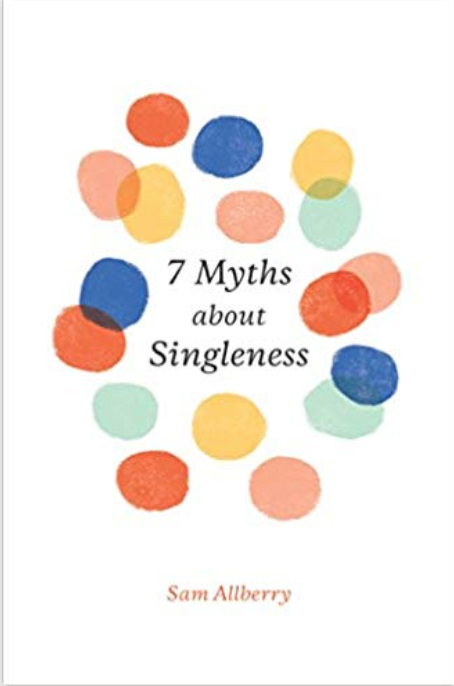
Sam Allberry
Because I’ve been married for thirty-seven years, it doesn’t often occur to me to read about the single life, and for that, I apologize to all of my single friends, family, and readers. Sam Allberry, a single pastor, starts with the premise that singleness is a good thing. Sadly, too many Christians see singleness as somehow “less than” God’s full design. Allberry delineates seven myths about singleness, inviting readers, both married and single, to consider what it looks like to live a fruitful and full life as a single and to welcome and respect singles in a culture that too often overemphasizes marriage and family.
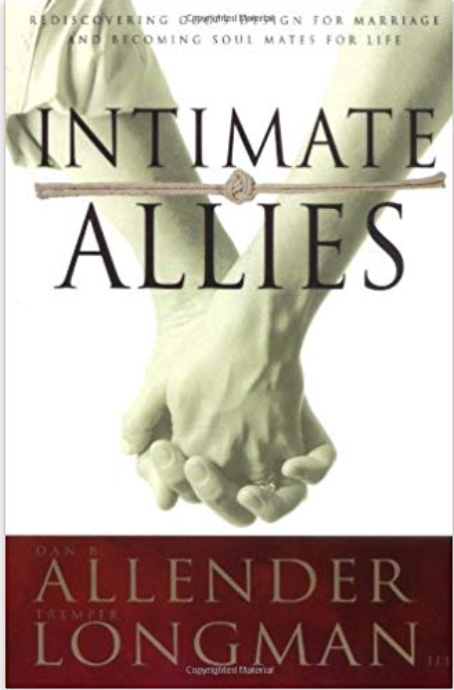
Dan Allender & Tremper Longman III
Instead of telling us “how to do marriage,” Allender and Longman tell us how God does marriage. The authors trace the history of marriage back to the first man and first woman, shows how everything went awry and how the Fall affects marriages today. Then they show the hope for marriage in the redemption of Jesus Christ. One of my favorite phrases from this book is about “calling one another to glory.” Marriage, Dan Allender and Tremper Longman III suggest, is not about our happiness; it’s about God’s glory. But we can take heart, because, as we grow together in glorifying God, happiness does come!
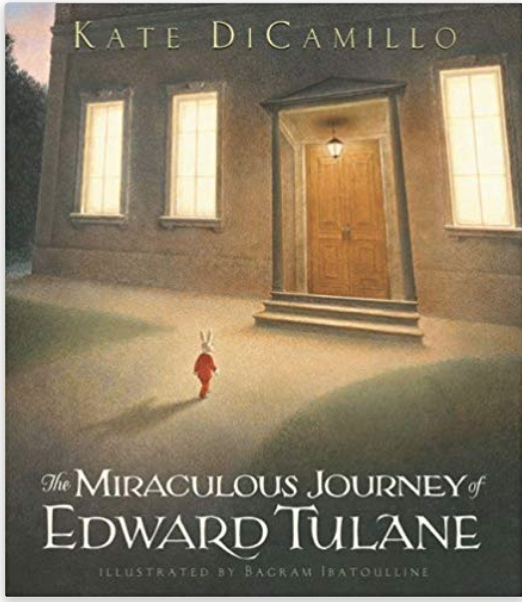
Kate DiCamillo
Because we all need to read more children’s books, and to become more like a little child…This is one of my favorite children’s stories that has profound truths for adults. I don’t want to give too much away, so I’ll simply say that it is about a vain stuffed rabbit who is humbled through much suffering. And it’s about learning how to love. Read it. Preferably in the hardback edition with the beautiful illustrations by Bagram Ibatoulline.
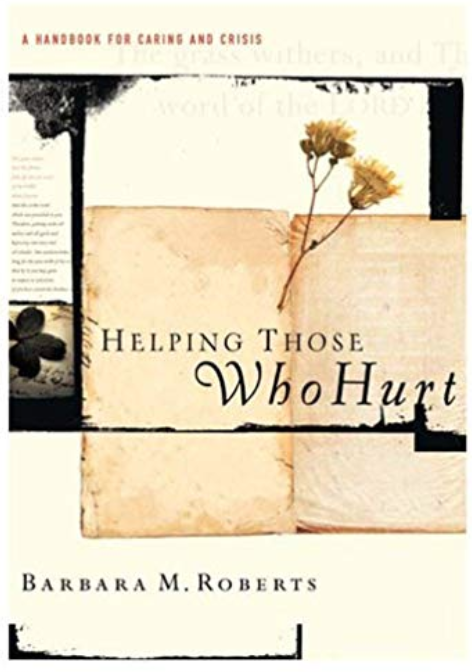
Barbara M. Roberts
This classic by Barbara M. Roberts, Director of the Caring Ministry at Cherry Creek Presbyterian Church, is a helpful reference for all who minister to the hurting. With concise chapters on illness and aging, death, grief, addiction, rape, and many other crises, Barbara clarifies the needs in each context and offers practical counsel for a loving response. She ends with a chapter on forgiveness, a necessary aspect of the healing process. This book is about ten years old now; the only thing I could wish for is an updated version of it.
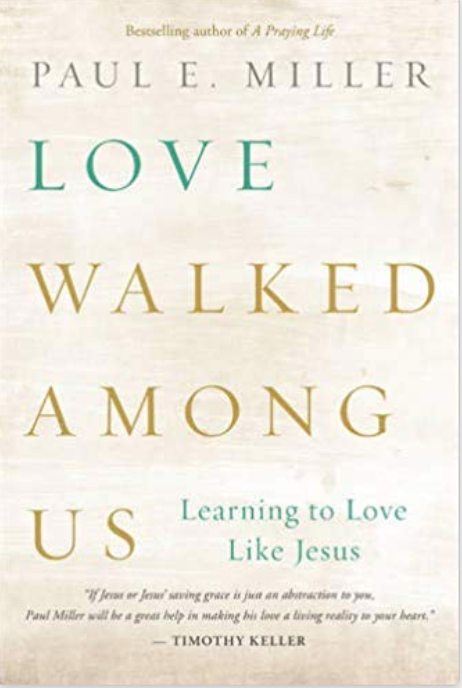
Paul Miller
This is my favorite book on how Jesus loves, and on how we grow in love as we love like Jesus. A wonderful storyteller, Miller retells the true stories of how Jesus loved various people like the Samaritan woman, Mary and Martha, and even his enemies, the Pharisees. In the stories we discover that we can love as Jesus loved—by looking and listening, speaking the truth in love, depending on God, and dying to ourselves.
Valentine’s Day can leave us feeling lonely, no matter how well-loved we are. Today I’m sharing an excerpt from the new devotional I’m writing for people recovering from all sorts of crises. It’s called “You Are with Me.”
Even though I walk through the valley of the shadow of death,
I will fear no evil, for you are with me;
Your rod and your staff, they comfort me. Psalm 23:4, ESV
Traversing the road of recovery is not unlike walking through the valley of the shadow of death. Each journey is complex and mysterious, of uncertain length, and fraught with unknown fears. And yet, according to David, who journeyed through many dark valleys, we can “fear no evil,” because we are not alone. The Lord is closer than whispering distance, guarding and guiding us with his presence.
Imagine you find yourself in a narrow alleyway running between two high buildings in a dangerous urban area. No streetlights. No building lights. Stark starless night darkness. You can’t see the tips of your fingers, much less the end of the alleyway. It’s too late to return to the other side; before you saw what you saw, before the surgeon made the cut, before your loved one died. The recovery road has much in common with David’s valley of deep darkness.
Notice that David walks through this valley of deep darkness; he doesn’t run, even though he might be tempted to do so. Running isn’t an option when you’re recovering from disaster. Notice that David walks through this deep valley. There is no way around it; there is no turning back. The only way is to go through it, to get to the other side. Notice that David is alone in this deep darkness: “Even though I walk.” Even when we are in healthy community, we can feel isolated in recovery, as if no one else has ever walked this particular shadowland before.
How would it be possible to fear no evil in a place of such “suspense and surmise,” in which “the evil of evils is uncertainty”[i]? The answer comes in the pivot point, verse four, “For you are with me.” Earlier, David told us that the Lord, third person, is his shepherd; now he addresses the Lord directly:
“You are with me.”
You, the King of kings, are with me.
You, the lion of Judah, are with me.
You, the crusher of Satan, are with me.
Take heart, dear friends. His light, the light that has overcome the darkness, has flooded this dark valley. The Lord, your Shepherd, who counts you as his sheep by his rod, who protects and guides you with his staff, is with you.
Lord, You are our Shepherd. We trust you to guide us, protect us, and secure us in this dark valley of deep uncertainty. Surround us with your love and mercy that we may never stray from you. Amen.
Read Psalm 23.
Listen to “God Is My Shepherd,” at https://www.youtube.com/watch?v=LtDXHgTi-5s.
For Reflection
What dark valley are you walking through right now? What is uncertain and frightening? How does it help to know the Lord is your shepherd?
[i] Charles Spurgeon, THE VALLEY OF THE SHADOW OF DEATH NO. 1595 https://www.spurgeongems.org/vols25-27/chs1595.pdf, 3.
Want to know when the new devotional is available? Please join Living Story subscribers to stay tuned and get free gospel centered resources.
Photo by Sasha Freemind on Unsplash