A New Kind of FOMO

A New Kind of FOMO

A different kind of FOMO

FOMO: Fear of Missing Out, defined by Merriam Webster as the “fear of not being included in something,” is a thing.

Ever since my daughter, counseling student Mary Elizabeth Blake, shared with us the dangers of social media, I’ve been paying more attention to its effects on me. According to psychologists, social media can cause crippling social and psychological problems, including a sense of isolation and loneliness, negative self-image, and jealousy, among many others. Social media also gives rise to FOMO, because people observe others having a great time and believe that they are missing out.

In continuing this month’s theme of freedom, I thought about a new and different kind of FOMO available to us as Christians: the Freedom of Missing Out. This kind of FOMO, which roots itself in our identity in Christ, gives many benefits without all the negative side effects.

With the new FOMO, Freedom of Missing Out, we get to miss out on some of the anxiety caused by traditional FOMO…

Fear of Missing Out stirs up some of the worst toxins in our hearts, the kinds of things Scripture warns us are dangerous to our souls:

Comparison:

What happens in your heart when you see a friend’s Instagram post of her gorgeous self with her gorgeous boyfriend/husband/children in some gorgeous, exotic place? According to psychologists, what happens to many people is they compare themselves negatively to that person and feel less valuable.

What if, instead, we were to “set our minds on the things above” (Col. 3:23) and revisit Genesis 1, that tells us – yes, this means YOU –

You are created in the image of God. You are blessed by God. The Creator of the Universe has given you a task to do – “Prosper! Reproduce! Fill Earth! Take charge!” (Gen. 1:26-28, The MSG).

Envy

The other thing that happens when we see our friend’s social media post showing off the shiny new car, new shoes, new jewelry, they just acquired, is we start to feel that devilish-est of emotions – envy.

According to 1 Corinthians 13:4, love …does not envy, so when we feel envy, we are murdering love. Envy eats contentment for lunch and tosses the remains in the trash. Because I am so vulnerable to the attack of envy, I am now trying to pay attention to how I respond to others’ good fortune and to be sure to count my own blessings before I start wishing I had others’.

In this new kind of FOMO, we will discover the freedom and joy we have in God and one another Share on X

Things we will NOT miss out on with the new FOMO:

On the other hand, the new kind of FOMO, the Freedom of Missing Out means that we will not miss out on things that are essential to a healthy soul:

We will not miss out on …God:

It occurred to me that we should actually have a healthy fearof missing out on God. Just yesterday I read this verse:

Be still in the presence of the Lord, And wait patiently for him to act. Ps. 37:7

When we enjoy the freedom of missing out on the many allurements social media holds out to us, we discover how our souls prosper and flourish in the presence of the Lord. Before his face, we bask in his delight, his grace, his forgiveness, his plans and purposes for us.

We will not miss out on…

True Community:

Don’t get me wrong – I love my “Facebook community,” but the images and words are no substitute for sitting across the table from a good friend or gathering with a group of friends and strangers alike to celebrate a wedding. Because God made us with bodies, because Christ appeared in the flesh, we must not forsake the joy of being together, face to face.

Dear friends, what would this world become if we lived into this new kind of FOMO, this Freedom of Missing Out and Fear of Missing Out on God and one another??

I just wonder…would psychologists start writing articles about this strange phenomenon of people enjoying new freedom because they have   dared to forfeit opportunities in the world in order to gain their souls? Mark 8:36

A Prayer for the Freedom of Missing Out

Lord, you know how our hearts, how we are so easily tempted to compare ourselves with others, forgetting how expertly you have crafted us. You know our needy, greedy proclivities towards envy, towards wanting things others have while forgetting the many benefits you have bestowed. Help, we cry, help. Help us to satisfy our hearts in you and enjoy the Freedom of Missing Out on cheap substitutes. In Jesus’ more-than-enough name, Amen.

Whatever Happened to Wisdom?

Whatever Happened to Wisdom?

What is wisdom?

What I need, I thought as I read Mary Elizabeth Blake’s posts about social media, is a wise tongue. I have begun to be more intentional about how I post, how I comment, and how I spend time looking at people’s pictures and posts with or without commenting. Thinking about a wise tongue made me think about wisdom itself – what is wisdom, and does anyone even want it anymore?

It turns out, based on an internet search, that many people in the 21stcentury think of wisdom in terms of “mindfulness,” which apparently means being attentive to what’s going on in the here and now. There are even entire conferences devoted to wisdom, Wisdom 2.0, for example. The stated purpose of the Wisdom 2.0 conference is to help people learn how “to live with greater wisdom, purpose, and meaning, while using technology in ways that create a more open and healthy culture.”

When I read that, I thought, “Hoo-RAH! I don’t have to shell out 1000 bucks for a conference to get this wisdom! I have a book that’s been around since before time began that teaches me how to live life in the here and now AND the hereafter! Not only that, it points me to the One who made all of that possible!”

Free wisdom!

You probably have it too, or you can read it for free! It’s the book of Proverbs, smack dab in the middle of the Bible. Have you read it lately? I am re-reading it and finding a lot that applies to my here-and-now-and-everafter life.

Consider these five verses and how they might help us grow in wisdom, purpose, meaning, mindfulness, and healthy relationships:

  1. On paying attention to the here and now in order to learn something, in this case, to work hard:

You lazy fool, look at an ant. Watch it closely; let it teach you a thing or two.

Nobody has to tell it what to do.

All summer it stores up food; at harvest it stockpiles provisions. Proverbs 6:6-8, The MSG.

(Don’t you just love how Proverbs speaks bluntly J!).

  1. On finding a strong sense of purpose:

Whoever goes hunting for what is right and kind

Finds life itself – glorious life! Proverbs 21:21, The MSG

  1. On finding meaning in life:

Leave your impoverished confusion and live!

Walk up the street to a life with meaning. Proverbs 9:6, The MSG

  1. On loving someone who is hurting:

 Wise words are like deep waters; wisdom flows from the wise like a bubbling brook. Proverbs 18:4, NLT

  1. On interacting with anyone, anytime:

 Your kindness will reward you, but your cruelty will destroy you. Proverbs 11:17, NLT

The good news of Proverbs is that there is wisdom for daily life; the better news is that there is One who is living wisdom, who sacrificed his life for us so that we might also live wisely:  Jesus.

Wisdom challenge:

Read or re-read Proverbs with Jesus in mind, and pray that you may live and love wisely in God’s story of grace.

Prayer:

Lord, God, we thank you for your wisdom and teaching on how to use words gently, kindly, and wisely. Help us to give life with our words and actions as you have taught us to do through your Servant, Jesus. In his life-giving name we pray, Amen.


Get free printable prayer worksheet and cards

3 Healthy Habits for Using Social Media

3 Healthy Habits for Using Social Media

Can we develop healthy habits for social media?

Guest poster, Mary Elizabeth Blake, graduate student in counseling, joins us again for the second part in the social media “mini-series.” Here’s Mary Elizabeth:

Last week, I shared three dangers of social media: narcissistic behavior, depressive symptoms, and habituation. If you missed this post, click here to read that first. Today, I offer three helpful tips for using social media in healthy ways:

  1. Track your usage

This may seem obvious to you, but for many, it is not. Did you know that most smartphones will tell you exactly how much time you have spent on different apps? If you can’t locate this on your phone, you can download various apps to tell you. Apps like “Moment” and “In Moment” allow you to see just how much time you spend on social media and actually regulate that usage for you. (This is also helpful for parents;-).

  1. Use it for good

  • When you do use social media, find the ways social media can be used for good. Facebook now offers ways for people to donate to a charity on your birthday—consider doing this or contributing in honor of a friend.
  • When you see a shared article or blog with an opinion that contradicts yours, do not comment/tweet back/dislike. Instead, humble yourself and pray for the writer or the sharer (or both).
  • Additionally, when you are about to post something, consider why you are posting.
    • Is it to be noticed?
    • To fit in?
    • To be liked?
    • Or is it to encourage others?
    • To show off God’s creation?
    • To express gratitude for the blessings God has given you?

(Note: You don’t always have to think through this question; for example, definitely post that picture of your family gathered at Thanksgiving. That IS a blessing! even if your caption doesn’t say it is!!)

  1. Center your use on routine

Remember the habituation danger we discussed last week?

  • Consider setting up a social media time each week, or every couple of days, to check in online. If you have decided your online time will be Mondays, Wednesdays, and Fridays from 1-2 pm, but it’s a Saturday afternoon and you don’t have plans, everything inside you might scream, “pick up your phone so you won’t be bored!!” Don’t give in. Do something creative like doodling, or take a walk, or call a friend.
  • Pay attention to the impulse. This applies to more than just social media usage. In his famous soliloquy (as I like to think of it), Paul says,

For I have the desire to do what is right, but not the ability to carry it out. For I do not do the good I want, but the evil I do not want is what I keep on doing. Now if I do what I do not want, it is no longer I who do it, but sin that dwells in me…Wretched man that I am! Who will deliver me from this body of death? Thanks be to God through Jesus Christ our Lord! So then, I myself serve the law of God with my mind, but with my flesh I serve the law of sin. (Romans 7: 18b-20, 24-25)

Paul is getting at mindfulness. He knows his mind will fail him because of the sin that is inside him. Our mind is impulsive. Our mind wants to do what it wants to do, and it wants to do it now! Who will deliver us from our impulsive sin? Thanks be to God, through His Son who died to free us from sin’s enslavement.

The hope of the gospel is that you are freed from enslavement to sin. Remember this good news as you work on using social media outlets in healthy and enjoyable ways that do not tear down.

I hope you have found this mini-series on social media to be helpful. Check out these resources if you’re interested in learning more.

Books:

Websites:

Get free printable prayer worksheet and cards

What You Need to Know about Social Media

What You Need to Know about Social Media

Is social media really dangerous?

This week and next, we are joined by guest blogger Mary Elizabeth Blake, a first-year graduate student in the Marriage and Family Therapy program at Reformed Theological Seminary Jackson. After reading a paper she wrote on social media and narcissism, I urged her to share some of what she learned with our readers because it’s top-level, relevant information we need to know.

Life behind the screen

This ACTUALLY happened: Last week, I was reading in Starbucks and watched a group of 4 teenage girls walk in, order their coffee, sit down, and…stare at their own phones in silence. SILENCE! I mean, don’t get me wrong, this introvert cherishes quiet, but this scene stunned me. Has our ability to relate to others been confined to life behind a screen?

It is no secret that technology is slowly destroying the planet distracting us from the foundations of true community. If I were the mother of any of those girls and saw her idea of “hanging out with friends,” I would probably embarrass her by sitting her down for a little chit-chat on what real community looks like and reminding her of the immanent dangers of social media usage. Then I would drive her home, pull out my memory box, hand her my Razr flip phone, teach her T-9, and take her iPhone away. (Okay, I’m probably going to need some parenting tips before Caleb and I have children!)

The good of social media

But if I am truthful to myself, to you, and to my hypothetical daughter, I love my phone and social media just as much as these girls do. There are so many wonderful opportunities that the Internet provides for us like catching up with old friends, making new ones, learning new things, supporting businesses we couldn’t otherwise support, showing everyone what our dogs look like when they are sleeping, and the list goes on and on…

You may be thinking: Please, Mary Elizabeth, spare us all the dangers of social media!!! Okay, friends, I will save you from hearing ALL of the dangers. However, I think as a community of believers who live primarily in relation to God and secondarily in relation to other people, we are responsible for recognizing how sin stains even the things that were created for good.

3 Dangers of Social Media

Danger 1: Narcissism

Social media sites and applications are formed around the idea of ME! MySpace was one of the first major social media sites – the title alone reveals their investment in “ME.” The me-centered mentality is further fed by individuals on these sites posting selfies, tracking likes, perfecting the following/follower ratio, etc. We are taught that we can regulate these things if we simply try hard enough. How does that shift over into our lifestyles offline? Not well, my friends. Our narcissistic personalities are frustrated in the “real world” by

  1. the lack of control over our circumstances,
  2. the fact that others are not centered on “ME” too, and
  3. the feeling that real life is uninteresting compared to online life.

Danger 2: Depression

In a 2016 study of the correlation between depression and social media usage, about 29.2% of people aged 19-30 showed moderate symptoms of depression, and 26.5% showed high symptoms of depression. That’s over 50% of people1! While the results of this study simply show us that people who use social media are very likely to become depressed, it fails to explore the how. Maybe you and I can take an educated stab at it. The DSM defines depression as “the presence of sad, empty, or irritable mood, accompanied by somatic and cognitive changes that significantly affect the individual’s capacity to function.”

  • Have you ever looked at a picture of a friend’s party and felt sad because you weren’t invited?
  • Have you ever seen a new mother’s post and felt physically and emotionally empty as you reflect on a previous miscarriage?
  • Have you ever said, “not now, kiddo” to your child (or in my case, dog child) as you swipe through your Instagram feed?

These are just a few examples of ways someone could experience social-media triggered depression.

Danger 3: Habituation

I love routine. I wake up every morning, make a cup of coffee, sit down next to my dog, read my Bible, and begin schoolwork. I actually think God loves routine (as exemplified in his unchanging grace and in covenantal faithfulness). Social media thrives on our usage, and will continue to draw us in with new features and reminders when we’ve been away for a while.

If you notice yourself needing to check in online every other hour or so, it may have become habitual for you. The difference between routine and habit is intentional cognitive choice. Are you clicking the app because it is routine (you are choosing) to see what is going on with friends, or are you clicking out of habit, almost unaware that you are even doing so?

If you’re like me, you may be feeling overwhelmed with hearing the dangers of something that was built to be fun and enjoyed! Rest assured – there are healthy ways to use social media and other online resources. Stay tuned — next week, I will share some ways to fight the dangers and enjoy social media appropriately.

References:

  1. Lin, L.Y, Sidani, J.E., Shensa, A., Radovic, A. Miller, E., Colditz, J.B., Hoffman, B.L, Giles, L.M, & Primack, B.A. (2016). Association between social media use and depression among U.S. young adults. Depression and Anxiety, 33, 323–331. http://dx.doi.org/10.1002/da.22466


3 More Ways for Weary Moms to Rest

3 More Ways for Weary Moms to Rest

To weary moms, continued…

Last week, I posted the first part of a letter I wrote to any moms wearied by the work of raising children. Today, enjoy part 2!

Dear weary mom, you have permission, in Christ, to stop…

  1. trying to be supermom. God designed us to be interdependent with others. Accept help and ask for it.

Are you trying to nurse a baby, help a first grader with homework, and cook dinner while your husband is sitting on the couch checking email? Ask him for help. It is true — he’s had a long day at work, but you’ve had a long day at work too. These days won’t be this busy FOREVER!! He won’t regret his involvement, and you won’t either.

Your next-door-neighbor loves to stay and watch mini-mite football practice. You have two other drop-offs to make. Why not ask him if he minds driving your son too?

God provides us with rest in the most practical of ways — we are members of a body with different gifts and in different seasons.

  1. saying “yes.” Practice one eloquent way to say “no” to the zillions of requests sent your way:

Someone else will be room mom (or dad), or maybe no one else will step up. The teacher does need help, but you’re caring for your aging grandmother — can you really do both without exhausting yourself?

It will require making some people unhappy (see number 1) and trusting that God will provide a way (Isaiah 43:19), but it will allow you the rest you were made for.

Dear weary mom, you have permission to make people unhappy. Share on X
  • Other things you may pronounce a guilt-free “no” to:
    sending homemade cupcakes to school for your child’s birthday,
  • buying your 16-year-old a new car,
  • and taking responsibility for your child’s failure or sin.
  1. saying “no.” Say yes to more play and rest.

Let’s be honest — it can become a habit, right?

“No, you can’t come in past curfew.”
“No, you can’t eat dessert before dinner.”
“No, you can’t watch Leave it to Beaver before you do your homework (TVLand, anyone:-)?).”
(And yes, when I was a child, I watched Leave it to Beaver every day before I did my homework:-)! (While eating Chips Ahoy cookies and drinking full-tilt Coke!)

Say yes to rest by saying no to one of the 40 volleyball/soccer games your two combined children will compete in. If you’re an introvert, stay home and lie on the couch with a good book; if you’re an extrovert, don a lime green feather boa and go to Chile’s with ten of your closest friends.

3 More Ways for Weary Moms to Rest Share on X

Tell the kids to skip the room cleanup and go out for ice cream. Let them take a sick day – adults get them – why shouldn’t they (I know – because they get school holidays:-) – but still!)? Tell them they can’t dump a bucket of ice on you for a good cause, but you will help them have a bake sale to raise money.

Rest, weary mom, because God created rest and Jesus gives rest.

“ And on the seventh day God finished his work that he had done, and he rested on the seventh day from all his work that he had done.” Gen. 2:2

Come to him, you weary and heavy-laden mom, and rest, for truly his yoke is easy and his burden is light.

Get free printable prayer worksheet and cards

SHARING IS CARING :-)!

If you enjoyed this post, just click on any of the share buttons!

5 [Un]Surprising Things about Correctional Ministries

5 [Un]Surprising Things about Correctional Ministries

Correctional Ministries Summit

“I was beaten with a braided extension cord by my mother, who ran a bootleg house.” Pastor Tony Lowden, Executive Director of Stone Academy, shared those words as he raised this puzzling question:

WHY did I escape the imprisonment every other male member of my family has experienced?

His answer (ET translation of a very profound “plenary”):  “I got hung up on a nail.”
The nail of God’s love which held Jesus to the Cross, the only sure anchor in this life, saved him from his seemingly certain incarcerated future.

My story with Correctional Ministries

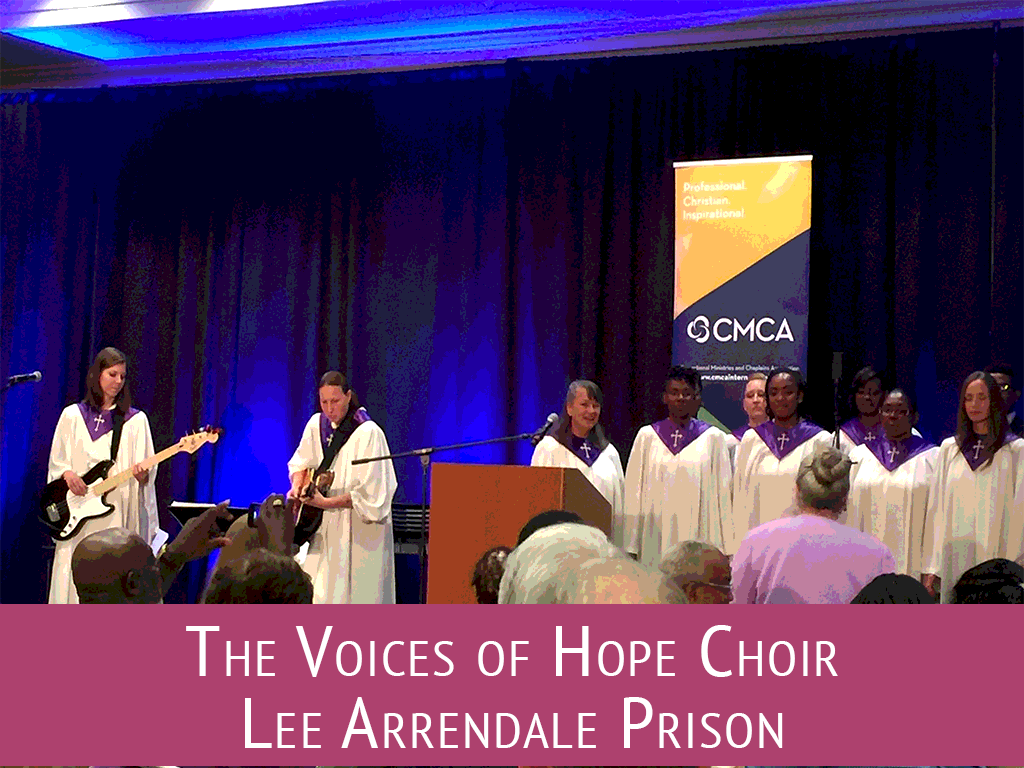
Lowden’s was among the many strong and compassionate voices speaking this past weekend at the Correctional Ministries and Chaplain’s Association Summit in Atlanta, Georgia. I spent 48 hours as a newbie to correctional ministry soaking up astounding statistics and stories about the impact these ministries are having on real people. I wept with others over songs shared by the Lee Arrendale Women’s Prison Choir. I sat under men and women solidly secure in their belief that the gospel is the only story that offers true hope to the dark reality of incarcerated men and women in America.

How did I come to be in this place? The whole story would require an additional blog. For now, let’s just say that a gentle, quiet question started forming in me about 2 years ago, “Should I become involved in prison ministry in some way, shape, or form?” I know I have teaching gifts, which I’ve used for over 25 years in white middle class churches and beyond. Should I try to use them in a different culture?

I did what I encourage my coaching clients to do – prayed, listened (to God and others), sought, waited. Last fall, an opportunity came to join a team of 4 delightful women, who, like me, don’t know much about correctional ministry (that’s the phrase that includes prison/jail/re-entry ministry) except that we have some gifts and want to help.

5 [UN]surprising things correctional ministries taught me

I AM LEARNING SO MUCH!!! And I’m so eager to share with you. So, here are 5 (out of about 50) at first surprising but really unsurprising things about correctional ministry.

  1. Are prisoners people too? Genesis 1:26-28.

    Too often, we see mug shots or read stories of a crime in the paper, and we jump to a conclusion — thug, druggie, evil. Our labels may be partially accurate, but they don’t tell the whole story.

One morning at the jail, after the worship service, we rode the elevator down with the inmates. The tall freckle-faced young woman in the orange jumpsuit had her pretty red hair pulled back in a high ponytail. She eagerly told us about all the books she had been reading while recovering from an injury in the infirmary. I could not shake the thought – I could as easily be in my living room listening to one of the girls on my daughter’s volleyball team.

Every incarcerated person is created in the image of God and bears his glory, no matter how well disguised it is by evil. Share on XI need to recall: Every incarcerated person is created in the image of God and bears his glory, no matter how well disguised it is by evil.

  1. What do the incarcerated need most?

    Mark Casson, executive director of Metanoia Ministries, a highly effective mentoring and re-entry program, graciously gave me an hour of his time. He posed this question of me.

As I searched my mind for the answer — “Car? Job? House,” he interjected.

“THE CHURCH!” He quoted Matthew 6:33: “But seek first the kingdom of God and his righteousness, and all these things will be added to you.” At first, I wondered – “Is he being practical?” But he explained that in churches, many “returning citizens” will not only be encouraged by the gospel, but will also be connected to resources for practical needs.What the incarcerated need most -- THE #CHURCH! Matt. 6:33 #prisonministry Share on X

  1. Which “culture” is more spiritual? Prison or America?

    Prison! In a spot-on workshop on re-entry, Mark explained that prison often affords many hours for Bible reading and praying. At the same time, it protects the prisoner from some of the temptations presented in American culture. He added that many incarcerated people may often experience rapid spiritual growth because of the time they spend in God’s Word.

  1. “Who’s the guy”?

    Dr. Harold Trulear, of Healing Communities, pointed out that 9 times out of 10 — yes, he said 9 times out of 10, when women are incarcerated, there is a guy involved. Not only are women prostituted by men, they also run drugs or buy guns for men. He added that where a man was not directly involved, emotional, physical, and spiritual abuse often influences women’s crimes.

  1. How can we help?

    You may not have a calling to correctional ministry, but all Christians are called to play a vital role. Here are some things you can do:

  • PRAY: Pray against the enemy and evil. Pray for…
    • the incarcerated and victims of crime
    • families and children of incarcerated and victims
    • correctional officers
  • HELP BY NOT HELPING: Rob Kendall, director of Against the Grain (http://www.atghope.org), exhorted us, “Don’t do things for people they can do for themselves.”
  • LEARN MORE: Prison Fellowship has one of the largest correctional ministry outreaches in the country. On their website, you can learn about prison reform, restorative justice, and more.

We all need correctional ministry.

I was talking to a wizened African-American woman, a coordinator of programs at a prison in Michigan. I explained that I was new to the conference and correctional ministry, but that I had been teaching Bible study in church for many years. She leaned over and took my arm and said, “You know, honey, you’ve been teaching prisoners, too. We’re all prisoners of sin.” What a wonderful encouragement to us all to continue to bring the hope of the gospel wherever we go.