“So teach us to number our days, that we may get a heart of wisdom.” Psalm 90:12
“Death isn’t a popular subject. We live in a society characterized by the denial of death. This is unusual because most people who have lived on this earth have given a great deal of attention to death. In fact, in every century except our own, preparing for a good death has been the goal of life.
We will learn to live well when we learn to live wisely. And we will learn to live wisely when we learn to realize that our days here on earth are numbered.”
Eugene Peterson, Conversations: The Message Bible with Its Translator, 871.
New column: “Number Your Days” (?)
If you missed the “Fourth Tuesday” column last month (still thinking about the title—what do you think about “Numbering Our Days”?), welcome to a new monthly blog focusing on the issues of aging, dying, and death from a gospel perspective.
Before you click away, even if you’re only twenty-five and think these matters are far removed from you, consider this:
Why you should number your days no matter your age
If you’re twenty-five, your parents are beginning to age, and your grandparents have entered their final quarter. Knowing a little more about some of the hard losses they face will help you to love them better. If you’re forty-something, you may be vaguely aware that you’re aging (what is it about turning forty that makes you suddenly need reader’s glasses or have more aches and pains after that weekend tennis tournament?). You’re probably even more aware that your parents are aging (and possibly your grandparents, since the fastest growing age group in America is 85 and over). If you’re sixty-something, you definitely know you’re aging, and you’ve probably already done at least a short stint of caregiving.
Moses, the man of God who began his career leading the exodus at the ripe age of eighty, knew a thing or two about numbering his days. He knew that being old didn’t disqualify a person from serving the Lord; he also knew that our time on this earth is fleeting. He knew that life on this earth could be full of “toil and trouble” (Psalm 90:10), and he could see from afar that a better promised land, a “heavenly country,” awaited him (see Hebrews 11:13-16). In Psalm 90, he asks the Lord to teach us to “number our days,” or as Eugene Peterson puts it in The Message, “Teach us to live well! Teach us to live wisely and well!”
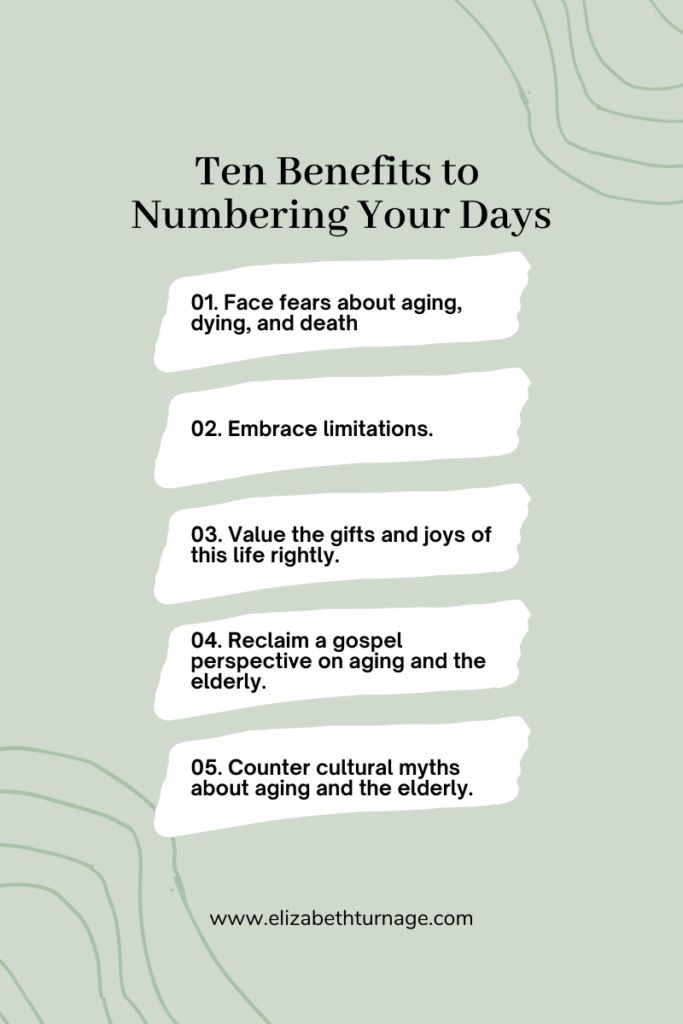
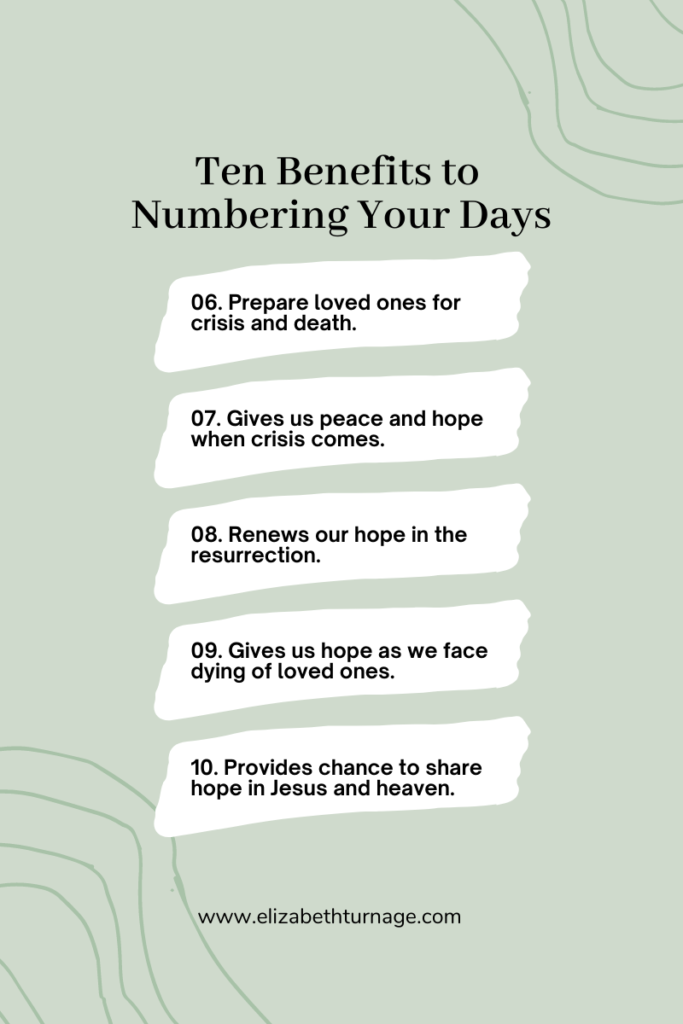
In this monthly column, I hope to help us do just that. I’d love your input (titles and topics, questions and suggestions, struggles and joys, etc.). Please feel free to message me using the contact form or by hitting reply to this email if you’re a subscriber (subscribe here by checking Fourth Tuesday on signup). Today I want to consider briefly ten benefits of numbering our days, that is, facing the issues of aging, dying, and death. We will explore these more fully in the coming months. If you’re short on time, just skim the bold, and you’ll get the main idea.
Ten Benefits of Numbering Our Days
-
Numbering our days helps us face our fears regarding aging and death.
Let’s face it, death is scary, and those of us who have watched others die know it isn’t always pretty. Death, as we will discuss when we look at the biblical perspective on death, was not God’s original design for his creation; it resulted from rebellion against God. Death is disorienting, and if we don’t want to die, and we don’t want our loved ones to die, well, at some level, we’re normal. As we name our fears around aging, dying, and death, we will also discover the profound biblical hope of living eternally through salvation in Jesus Christ.
-
Numbering our days helps us to embrace limitations.
If you haven’t yet had the discussion with a parent about revoking their driving privileges, trust me, it’s awkward. If you haven’t yet had to move a parent who loved independent living to an assisted living facility, trust me, it’s agonizing. The fact is, aging often brings increasing limitations on our independence, and we naturally resist these limitations. However, as Christians, limitations can lead us to be more like Christ, who himself, “made himself nothing…. being born in the likeness of men” (Philippians 2:7). In Christ, we can surrender to the indignities and losses that often come with aging and dying, because Christ himself surrendered to indignities, humiliation, and death.
-
Numbering our days helps us to value the gifts and joys of this life rightly.
What we don’t want to face about aging, dying, and death is the loss. Consider the life of an elderly person you know — what losses have they faced in the past five years? Loss of a spouse? Loss of a home? Loss of driving? Loss of health? Facing the losses of aging, dying, and death can, paradoxically, lead to hope, “Though our outer self is wasting away, our inner self is being renewed day by day” (2 Corinthians 4:16). Facing the loss we will all eventually experience also helps us to value the gifts we now enjoy—healthy bodies, family feasts, meaningful work—as appetizers of the great feast we will enjoy with Christ in heaven.