A Prayer about Cheerful Giving

A Prayer about Cheerful Giving

Generous Father,

What a mind-boggling statement about giving. 

Frankly, it’s not always what we hear in the church. 

Some churches hesitate to speak about giving 

because of the fear that people will feel manipulated. 

Other churches work the crowd, 

twisting arms and loading on guilt. 

The gospel frees us from both errors,

laying out the one essential motivation for giving:

You have given us your Son as our Savior. 

You sent him into the world, to die on a cross, 

so that we might become your children. 

You didn’t give him grudgingly; 

you didn’t give him “under compulsion”;

you didn’t give him reluctantly. 

You gave him with great joy and delight, 

knowing that this gift would return to you 

the profound joy 

of welcoming your children home.

Lord, help us to meditate on this good news 

as we consider giving. 

As we do, make us cheerful, generous givers, 

and give us great joy in the privilege of giving. 

In Jesus’ life-giving name. Amen. 

Read 2 Corinthians 9.
A Prayer about Thanking God for Creation

A Prayer about Thanking God for Creation

Lord God,

It is indeed good to give thanks to you—

when days are easy and when they’re not.

Today, I thank you for some of my favorite things 

about your extraordinary creation:

The teal-turquoise-marine of the Gulf of Mexico 

and the sugary velvet feel of the white sand.

The juicy explosion of a homegrown tomato 

And ripe blueberries fresh-picked from a friend’s yard.

A purple-pink-and-blue sunset, 

heat lightning against a dusky sky, 

and lightning bugs twinkling in the dark.

[Name some of your favorite things about God’s good creation.]

As we meditate on your glory inscribed in your creation, 

we thank you for the many good gifts 

you give your beloved children 

every day simply because you delight in us. 

In Jesus’ creative name. Amen.

Read Psalm 96:1-13.

A Prayer about the Questions God Asks

A Prayer about the Questions God Asks

Pursuing God

Thank you for chasing after us when we try to run away.

Like Hagar in the wilderness, 

we can run ourselves into the ground,

but you seek us, 

and you draw us out of our hiding, 

asking questions we really need to hear:

Where have you come from?

Where are you going?

Or, as you asked Adam and Eve 

when they “hid” from you after eating the fruit,

Where are you?

You don’t ask these questions 

because you don’t know the answers.

You don’t ask these questions 

because you want to trap us.

You ask them 

to invite us to see where we are, 

to see where we’ve been, 

to see where we’re headed without you. 

But you also ask them 

to reveal the most important thing 

we need to know—

where you are (right here with us), 

and who you are: 

“The God Who Hears, 

The God Who Sees,” 

the God who looks after us (Genesis 16:13). 

May we listen to your questions, 

letting them draw us 

to your loving and forgiving presence.

In the name of our Savior,

 Immanuel (“God-with-us”), we pray. Amen. 

Read Genesis 16:1-16.

If you’d like to read more about Hagar’s story, check out this week’s blog. 

Two Crucial Questions for Recovery and Restoration

Two Crucial Questions for Recovery and Restoration

Hi Friends,

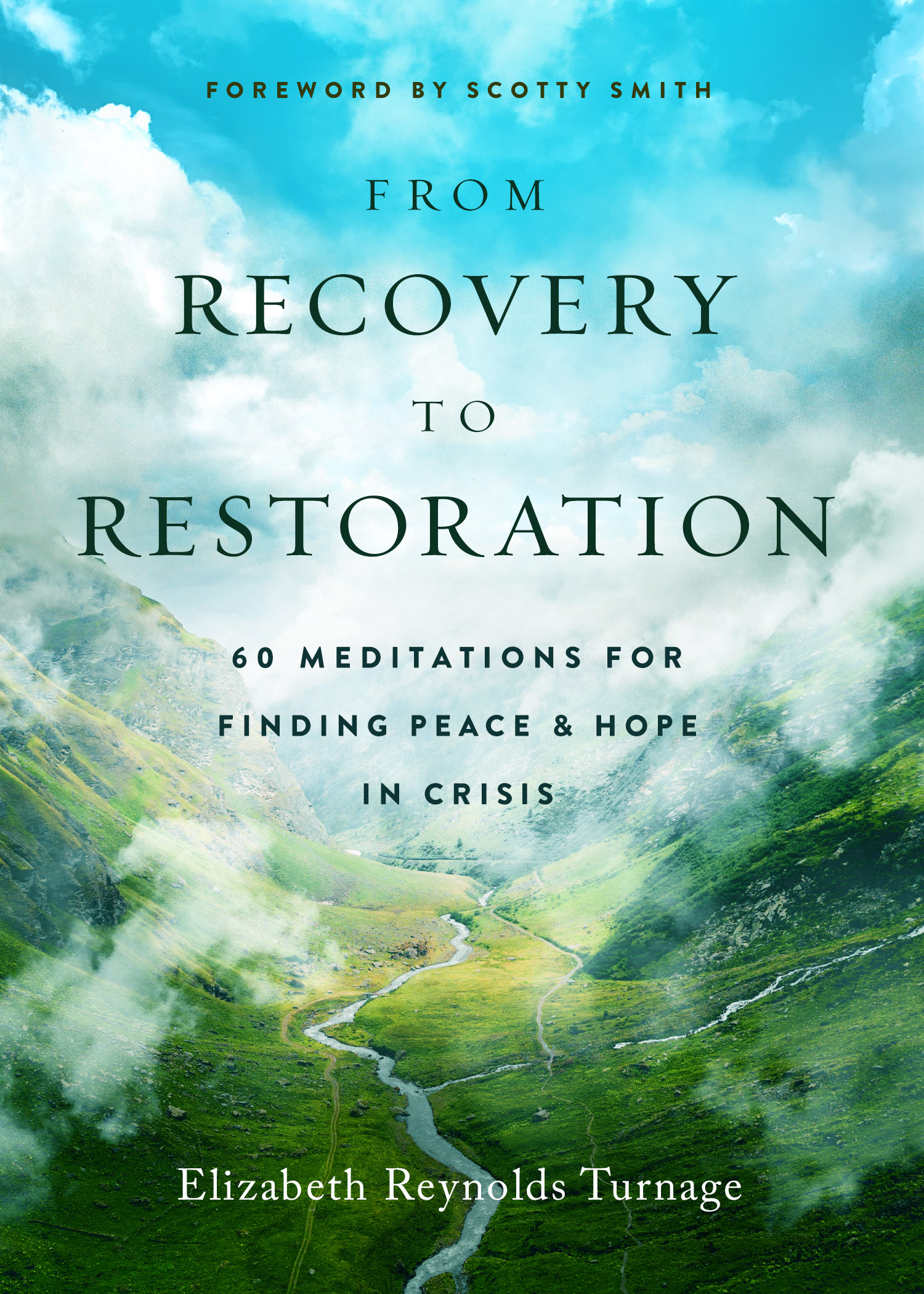
This week’s meditation, an excerpt from From Recovery to Restoration: 60 Meditations for Finding Peace & Hope in Crisis, reminds us that when we are running and hiding in the midst of difficulty, Jesus is always running after us. When he finds us, he asks us two key questions that are always important to consider. I hope this message offers hope to you or to someone you love today. 

Where have you come from, and where are you going? Genesis 16:8, ESV

When a massive wildfire has left us homeless, or an abusive boyfriend has left us loveless, when a co-worker’s betrayal has left us jobless, or a child’s unplanned pregnancy has left us speechless, we may feel like running away from our disastrous circumstances. If we run, we may end up in a wilderness, lonely and lost. The good news of the gospel is that Jesus himself meets us in that desolate place. 

Hagar knew the desperation of disastrous circumstances. Her mistress, Sarai, unable to conceive, decided to use a method common in her culture to produce an heir—she would give her maidservant to her husband. When Sarai’s plan worked and Hagar conceived, Hagar became proud and showed contempt to Sarai (Genesis 16:4). Sarai, in turn, “dealt harshly” with Hagar (Genesis 16:6), and Hagar fled—back to Egypt. During her flight, by a spring in the wilderness, Hagar was found by the angel of the Lord (Genesis 16:7).

Hagar’s story reminds us of how the angel of the Lord, or Jesus himself, meets us in our desperate flight from disastrous circumstances:

  • He finds us. He finds us because he hears our affliction, and he seeks us in our distress (Genesis 16:11, 13). He is the “God-who-sees,” the Jesus who is looking for us.
  • When he finds us, he treats us with grace and favor. The Lord may ask us two crucial questions which re-awaken our hearts to his kindness:
    • “Where have you come from?” (Genesis 16:8). This question re-orients us, asking us to remember how God has previously redeemed and rescued us.
    • “Where are you going” (Genesis 16:8)? Like Hagar, we often take off without considering where we are going, and we may end up in a land of sin and unbelief. The question “Where are you going?” draws us to hope, to imagine how God will restore in the midst of disaster.
  • The Lord calls us to return. Just as the angel of the Lord gave Hagar a hard command—to return home (where despite how we might see it, she would be provided for and even blessed), he calls us to come home to him and surrender to his plan and provision for our lives.
  • He makes a promise of fruitfulness. To Hagar, the angel of the Lord promises that he will multiply her offspring. To us, the Lord makes the same promise: as we return to him, he will continue to grow us, to mature us, and to multiply his kingdom through us. Indeed, through his work in us, he will restore others to himself.

 Dear friends, if you are fed up and feel like fleeing, pause for a moment and listen to the One who has already heard your cries. Return to him, and submit to him, and wait to see the story of restoration he will write through your disaster.

Prayer

Lord, Jesus,

Thank you for listening to our cries and for coming to find us. Help us to return to you and trust in you, even when we can’t see what you are doing.

In your preserving name, Amen.

Further Encouragement

Read Genesis 16.

Listen to “Who Is like Our God?” by Laura Story.

For Reflection

Spend fifteen minutes journaling about the two crucial questions, “Where have you come from” and “Where are you going?”

From Recovery to Restoration cover

Get Hope for Troubling Times

Advance Review for From Recovery to Restoration

"When the storms of life crash into our lives, the devastation left behind is often overwhelming. Recovery and healing is slow and arduous. Elizabeth Turnage's devotional is for all those laboring toward recovery. From Recovery to Restoration is a hope-filled, gospel-laced, and Christ-exalting book which invites us into God's story of redemption and helps us see how he is at work to redeem and restore all things, even the aftermath of our personal losses, heartaches, and trials."

Christina Fox

Writer, Counselor, Speaker

author of A Heart Set Free: A Journey to Hope Through the Psalms of Lament.

A Prayer about Being Perfect

A Prayer about Being Perfect

Heavenly Father, 

As a recovering perfectionist, 

I confess, this verse always makes me anxious 

when I first read it.

But then I reread Dr. Doriani’s commentary on Matthew, 

and he reminds me, 

the command is also a promise as phrased in Greek, 

“You shall be perfect as your Heavenly Father is perfect.”

As he says, the word “perfect” also reveals 

how completely inadequate we are 

to live out Jesus’ commands 

apart from his mercy and grace 

operating in our lives. 

The word “perfect” means “mature and complete,” 

but we know we’re nowhere near 

as mature and complete as God is, 

so it must be a process. 

Indeed,

becoming mature and complete 

takes a lifetime of your sanctifying work 

through the Spirit. 

Becoming mature and complete 

doesn’t mean “work harder”; 

it means “depend on God more,” 

because you are the God 

who makes new selves out of old selves (2 Corinthians 5:17).

Becoming mature and complete 

doesn’t mean “never make a mistake”; 

it means “run to God 

with all of your mistakes, 

weaknesses, and sin.” 

To be perfect

is to trust in you alone 

to finish the good work 

you began in us in Christ Jesus (Philippians 1:6). 

In Jesus’ perfecting name. Amen.

Read Matthew 5:17-48; Philippians 3:12-16.